Sydney Observatory — stargazing, museum and honest visitor guide 2026
Sydney: The Rocks 90 minute history walking tour
Duration: 1.5 hours
Is Sydney Observatory worth visiting, and how much does it cost?
Sydney Observatory is open Thursday to Sunday, with pre-booked tours Wednesday to Sunday; see the official Powerhouse website for current admission and tour prices. Night sky observing sessions (the main draw) must be booked in advance. The night sessions — using historic telescopes to observe the moon, planets, and star clusters — are one of Sydney's more distinctive experiences. Cloud cover can cancel viewing, which is a risk to factor in.
At a glance
| Where | Observatory Hill, The Rocks — a short walk uphill from Circular Quay |
| Cost | See the official Powerhouse website for current admission and tour prices; open Thursday to Sunday |
| Time needed | 30–45 minutes for the daytime galleries; 1–1.5 hours for a night session |
| Getting there | 10-minute walk from Circular Quay through The Rocks; no on-site parking |
| Best time | Autumn/winter (March–August) for more reliable clear skies; book early in a short stay |
Sydney Observatory — the basics
Sydney Observatory sits on Observatory Hill in The Rocks, the highest point in the inner city at about 45 metres above harbour level. The building dates from 1858, making it one of Sydney’s oldest intact public buildings, and it functioned as Australia’s primary time-keeping and astronomical research station from opening until the 1980s. It is now operated by Powerhouse as a working museum and public observatory.
The museum gallery inside the main building covers the history of astronomy in Australia, the observatory’s original instruments, celestial navigation, and the southern hemisphere’s unique astronomical perspective. Check the official Powerhouse website for current admission details.
The key paid experience is the night sky observing session — guided sessions using the historic 1874 telescope and modern computerised telescopes to observe the moon, planets, and deep-sky objects depending on the season.
Night sky sessions
Pre-booked tours run Wednesday to Sunday (times vary — check the official Powerhouse website when booking), and prices depend on the ticket type; check the official Powerhouse website for current prices. Standard tours suit ages 12 and over, while Family Tours suit ages 6 and over. Tours include more than 100 stairs. Sessions must be booked in advance — they sell out, particularly on weekends. Heritage conservation works are underway, so access to some areas may be limited.
What you observe depends on the season, the weather, and the phase of the moon. In a clear session, participants typically view:
The Moon (when visible): Even through a relatively modest telescope, the lunar surface — craters, mountain ranges, the terminator line between light and shadow — is dramatically more detailed than the naked eye shows.
Planets: Depending on the time of year, Jupiter, Saturn (with rings visible), Mars, or Venus may be well-positioned. Saturn’s rings through the historic 1874 telescope is the highlight observation that most visitors cite.
Star clusters and nebulae: The southern hemisphere sky contains some of the best deep-sky objects visible from Earth — the Eta Carinae Nebula, the Jewel Box cluster, the Magellanic Clouds (visible to the naked eye on clear nights). The astronomy educator on each session guides you through what is observable.
Cloud risk: Sydney averages around 300 days per year with reasonable visibility, but urban haze and cloud cover from onshore weather patterns do affect sessions. The observatory provides a refund or rebook in the event of cancellation due to cloud cover. Given the disappointment risk, particularly for visitors in Sydney for a short time, booking for earlier in a multi-day stay rather than the final night is advisable.
Daytime visit — worth doing
Even without a night session, the hill and museum are worth the daytime visit. The main reasons:
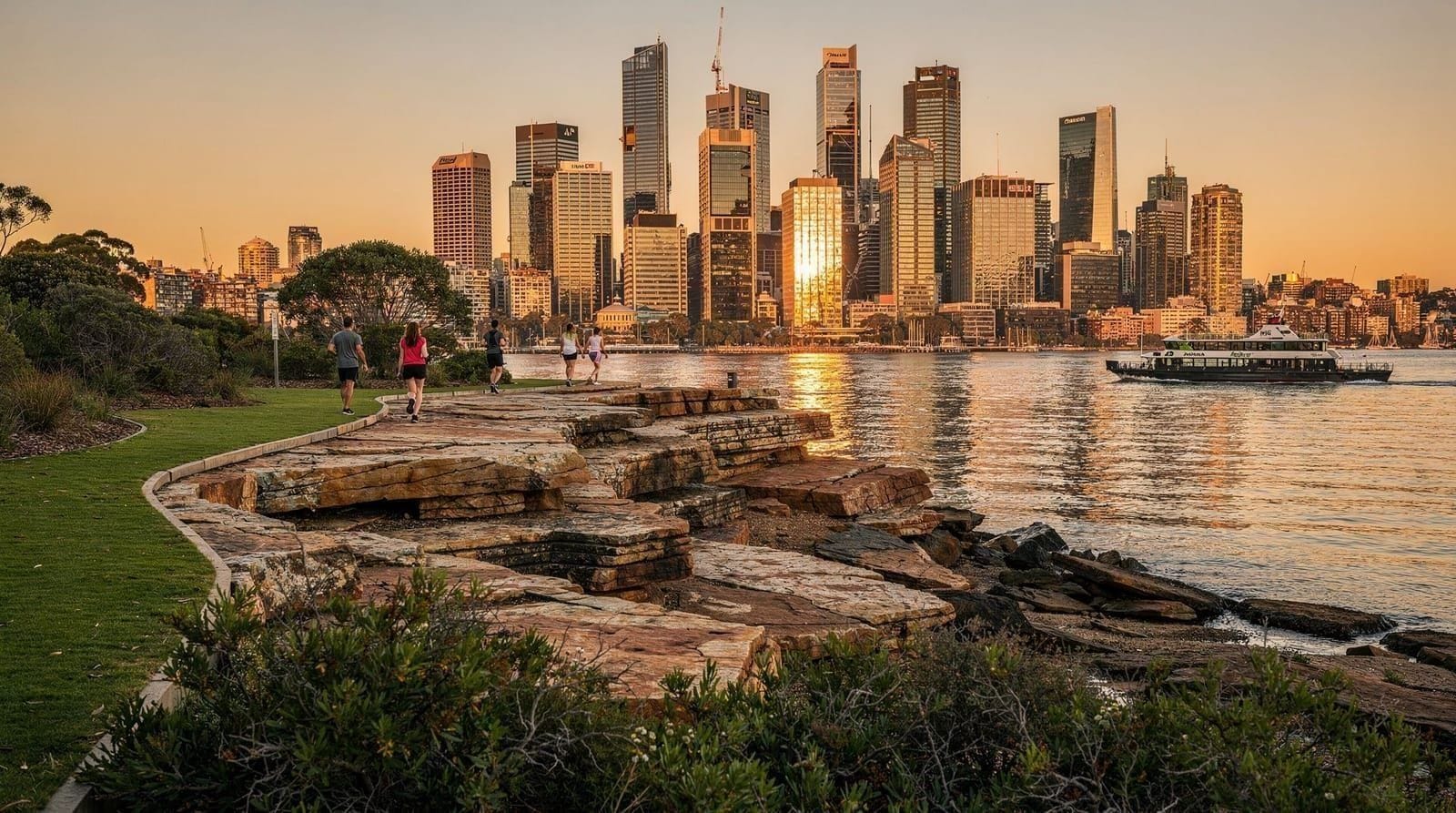
The view: Observatory Hill parkland, which surrounds the building, gives you an elevated view across the western harbour — Barangaroo, the Harbour Bridge, and the North Shore visible over the tree line. It is a quieter and less crowded viewpoint than the Circular Quay waterfront and Mrs Macquaries Point.
The Time Ball: The copper time ball at the top of the main tower drops at exactly 1pm each day. This tradition dates from 1858 when it was used by ships in the harbour to calibrate their chronometers. Watching it drop is free and takes about 30 seconds, but it is a small piece of Sydney history worth catching if you are there at the right time.
The museum galleries: The exhibition “Astronomy in Australia” covers the Aboriginal astronomical tradition (including a replica of a 3,000-year-old stone arrangement), the history of European astronomy in the southern hemisphere, and the modern role of Australian telescopes in international research. Allow 30–45 minutes. Free.
Getting there
Observatory Hill is a 10-minute walk west from Circular Quay, past the Museum of Contemporary Art and up a path through the hill-side parkland. The address is 1003 Upper Fort Street, Millers Point (Observatory Hill, in The Rocks). There is no parking immediately adjacent — do not drive.
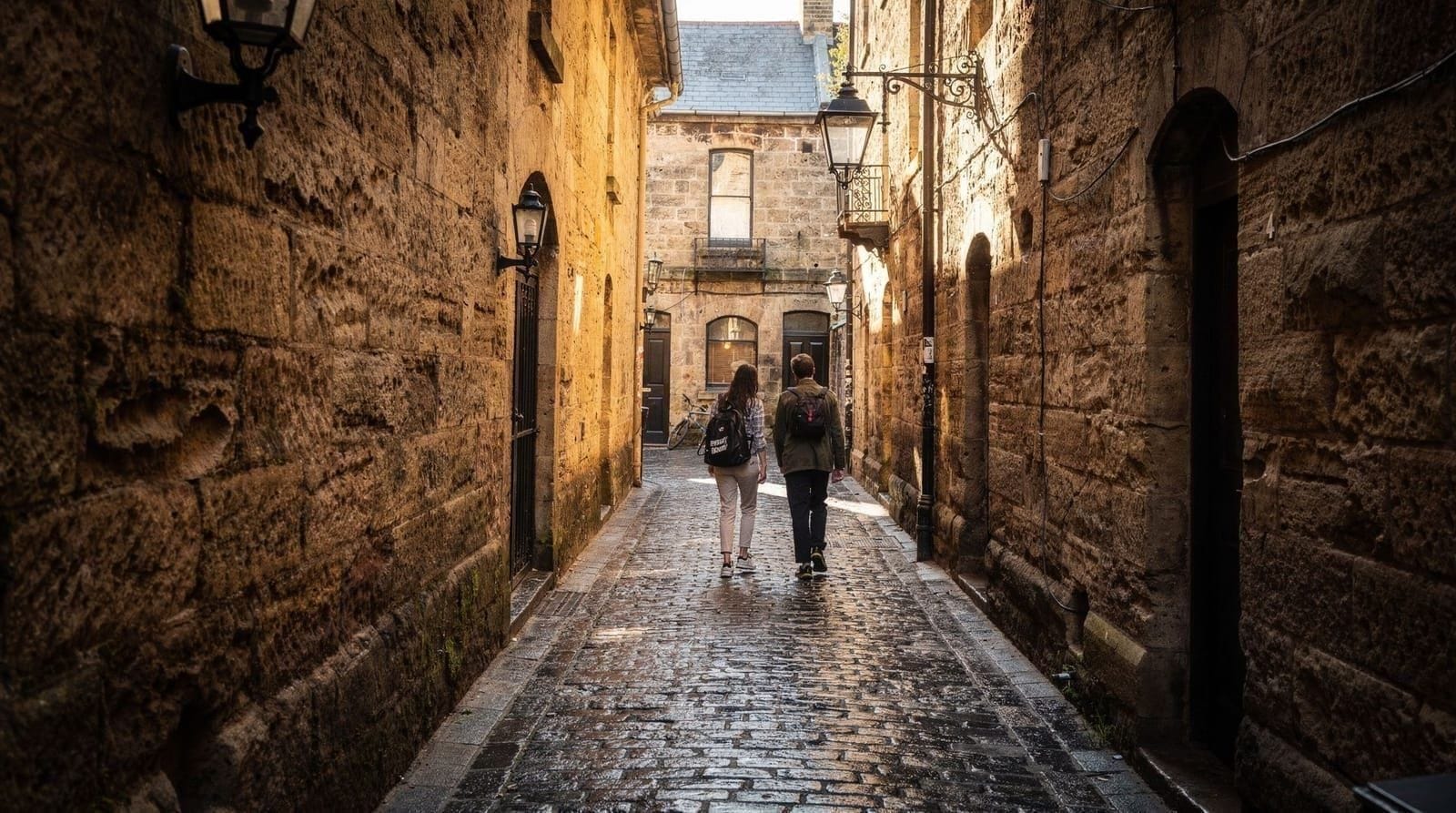
The walk from Circular Quay up through The Rocks to the Observatory is a pleasant route that passes through the oldest parts of Sydney’s colonial streetscape. The Rocks history walk guide maps this route in detail. Combining the Observatory with a Rocks walking tour makes a natural 3-hour heritage morning.
Practical notes
Booking night sessions: Book directly through the official Powerhouse website. Avoid informal reseller sites. Night sessions book out weeks in advance on weekends from October through February.
What to wear for night sessions: Even in summer, Observatory Hill catches the harbour wind at night. Bring a light jacket. In winter (June–August), dress warmly — you will be standing outside at the telescopes.
Photography during night sessions: Night sky photography through the telescope is not straightforward without adapter equipment. The observatory has a merchandise shop that sells basic smartphone telescope adapters. Most visitors find the experience of looking is more satisfying than trying to photograph it.
Combining with the Planetarium: Powerhouse also runs Powerhouse Ultimo, which is temporarily closed for revitalisation; check the official Powerhouse website for the Parramatta museum.
Sydney Observatory history — why it matters
The observatory was established in 1858 because the colony of New South Wales needed precise time for navigation — the harbour was a major international shipping port, and ships needed to synchronise their chronometers to calculate longitude accurately. The original brief was not scientific research but practical maritime timekeeping.
The site on Observatory Hill was chosen for its elevation, its harbour sightlines (the time ball on the building is visible from ships in the harbour), and its position clear of the ground-level pollution of the colonial CBD. Convict and colonial sandstone is used throughout the building — it is a characteristic material of 19th-century public buildings in NSW, visible also in the wall along Argyle Street in The Rocks directly below the hill.
The astronomer William Scott was appointed the first government astronomer and established a programme of systematic sky surveys that continued until the observatory’s scientific research function was relocated to Siding Spring Observatory in northern NSW in the 1980s. Sydney’s light pollution and urban growth had made the inner-city telescope site unsuitable for cutting-edge research, but the historic equipment and the atmospheric location made it a natural candidate for a public museum.
The telescopes — what is actually in the building
The 1874 telescope is the oldest functioning public telescope in Australia. It was manufactured in Dublin and installed at a time when Sydney’s astronomical programme was competitive with European observatories. The 11.4-inch lens (about 29 cm diameter) is modest by modern research standards but exceptional for 19th-century public astronomy. On nights when it is in use for public sessions, looking through a 150-year-old telescope at Saturn’s rings carries a different weight than looking through modern equipment.
The observatory also has several modern computerised telescopes for the night session programme — these are used for finding faint objects (nebulae, galaxies) that the historic telescope is not optimised for. The blend of historic and modern equipment during a single session is well-handled.
Observatory Hill park — worth visiting independently
The parkland surrounding the observatory on Observatory Hill has been a public park since the 1870s. It is used by local residents for morning exercise, picnics, and as a lunch spot by workers from the nearby CBD and The Rocks.
The park’s main attraction for visitors is the elevated view it provides — across to Barangaroo, toward the bridge, and over the western harbour. There is a bandstand (1880s, historic) in the park that is occasionally used for community events. Several large Moreton Bay figs provide shade in summer. The park is free, always open, and consistently less crowded than the famous viewpoints at Circular Quay and Mrs Macquaries Point.
The combination of Observatory Hill (15 minutes) + The Rocks (30–45 minutes) + Circular Quay (15 minutes) makes a natural western-CBD heritage circuit. See the Rocks history walk guide for the complete walking route through this precinct.
The 3D space show
In addition to the outdoor telescope sessions, the observatory operates a 3D space theatre — a small domed screening room showing immersive films about the solar system, deep space, and astronomical phenomena. Sessions run during opening hours; check the official Powerhouse website for current prices. The films are oriented toward children and general audiences rather than astronomy specialists, but the 3D dome format is distinctive.
This is one of the few Sydney experiences that is meaningfully better for children than for adults — the scale and novelty of the dome format engage younger visitors more consistently. For families with children aged 6–12 who have an interest in space, the 3D show combined with the daytime gallery visit makes a good 1.5-hour rainy-day option.
When the sky is overcast — what to do instead
The night sky session is the primary paid experience at the observatory, and cloud cover can cancel it with short notice. If you are visiting during an overcast night, the options are:
- Attend anyway for the indoor exhibition component, the 3D space show, and the observatory history — and accept that the telescope observation may be curtailed.
- Reschedule (the observatory’s policy allows rebooking for weather cancellations).
- Visit during the day instead for the gallery experience and the Time Ball observation.
Sydney’s autumn and winter months (March–August) typically have lower cloud cover frequency than summer and are more reliable for night sessions. If your trip is short and a night session matters, book for earlier in your stay rather than the final night to allow a contingency.
Observatory vs Sydney’s other harbour viewpoints
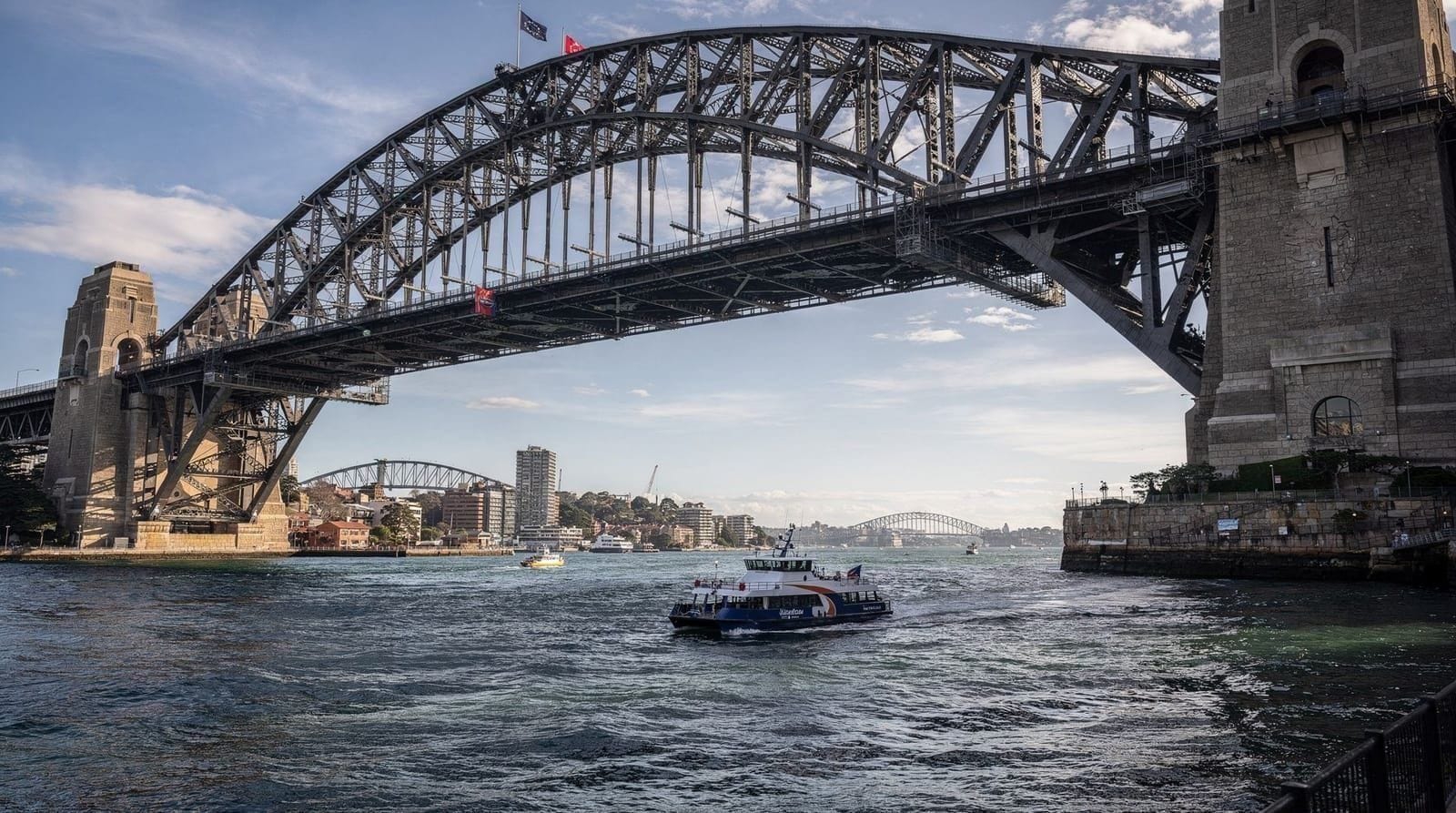
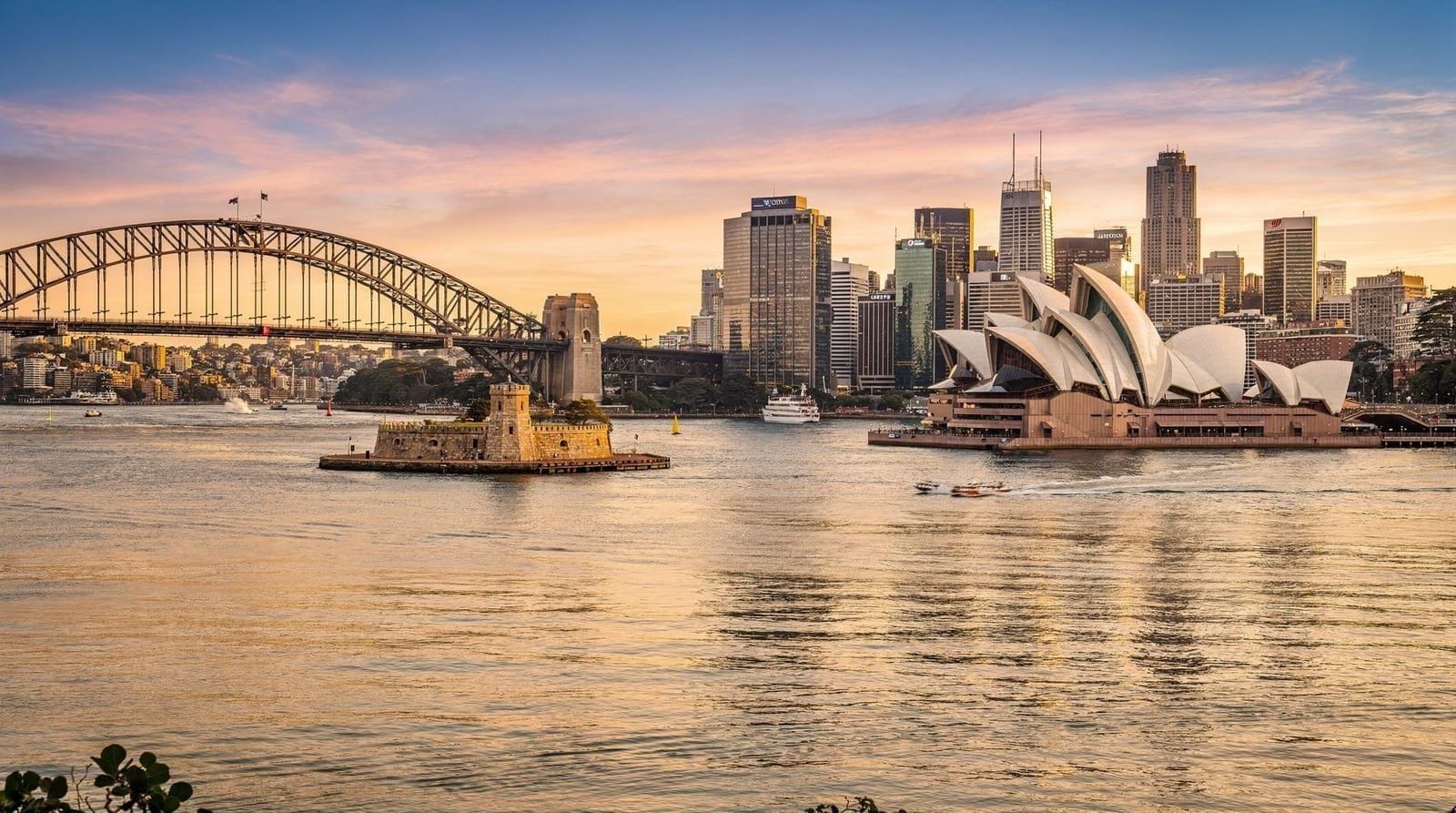
For a free elevated harbour view without a paid night session, Observatory Hill compares well against Sydney’s better-known lookouts. It has fewer crowds than Mrs Macquaries Point or the Circular Quay promenade, though the sightline favours the western harbour (Barangaroo, the Bridge from the side) rather than the classic Opera House-and-Bridge-together shot those other spots give. If you want that postcard framing, Mrs Macquaries Point remains the better choice; if you want quiet and a genuine sense of Sydney’s colonial history layered into the view, Observatory Hill wins.
Combining the Observatory with the rest of The Rocks
The Observatory sits at the western edge of The Rocks, Sydney’s oldest surviving neighbourhood, making it a natural anchor for a heritage-focused half-day. A sensible order: start at Observatory Hill in the morning before crowds build, walk down through The Rocks’ cobbled streets (weekend markets if it’s a Saturday or Sunday), and finish at Circular Quay or The Rocks itself for lunch. The Rocks history walk guide maps the full route, and the Rocks Dreaming tour adds an Aboriginal cultural perspective on the same precinct if you want to go deeper than the self-guided walk.
Planning the rest of your day around the Observatory
The Observatory works best as one stop in a longer day rather than a destination on its own. If you are building a first itinerary, the Sydney for first-timers guide shows where a quiet hill-top stop fits between the big-name sights, and the 3 days in Sydney itinerary leaves natural gaps for an evening session. For a tighter stay, the 48-hour weekend plan can absorb a free daytime visit without much trouble.
If the history of the hill interests you, a guided walk adds the stories that the plaques leave out. A history walk through the sandstone streets below the hill is one option on foot, and some visitors prefer a short guided history tour of The Rocks so that someone else handles the route and the storytelling.
Because night sessions finish after dark, think about dinner before or after. The Sydney restaurants guide and the cheap eats guide cover options at different budgets, and the Circular Quay area is the obvious place to look for something close to the ferries and trains home. The Opal card guide explains how to get back to your accommodation afterwards, and the getting around Sydney guide covers the wider picture.
For a different kind of evening in the same neighbourhood, a ghost tour of The Rocks after dark pairs naturally with the colonial atmosphere you pick up on the hill, though it is a separate booking from the telescope session. If the Observatory leaves you curious about the harbour itself, the Harbour Bridge guide and the Barangaroo guide are good next reads, and the Aboriginal heritage guide gives context for the Aboriginal astronomy covered in the galleries.
Frequently asked questions about Sydney Observatory
Do you need to book Sydney Observatory’s night sessions in advance? Yes — night sky sessions must be booked ahead through the official Powerhouse website and regularly sell out, especially on weekends between October and February. Walk-up availability is unreliable, so book as soon as your dates are confirmed.
What happens if it’s cloudy on the night of your Sydney Observatory booking? The observatory offers a refund or rebooking if cloud cover prevents telescope observation. You can also still attend for the indoor exhibition and the 3D space show, which run regardless of weather.