Skydiving near Sydney — outdoor and indoor options guide
Sydney: Indoor skydiving experience
Can you go skydiving near Sydney?
Yes — two main dropzones operate within 90 minutes of Sydney. Skydive Australia in Wollongong (80 km south) is the most popular, with ocean views over the coast and Kiama. Picton Parachute Club (70 km south-west) is a smaller, club-oriented operation. Both offer tandem jumps for first-timers at approximately AUD 280–399. Indoor skydiving at iFly Sydney is available in the CBD for AUD 55–90.
Skydiving in the Sydney region means either a tandem jump from a coastal dropzone or an indoor skydiving session at iFly — the wind-tunnel facility in the city. Both deliver adrenaline; they are very different experiences.
At a glance
| Wollongong (tandem) | Picton (tandem) | iFly (indoor) | |
|---|---|---|---|
| Cost | AUD 279–329 | Similar, ± | AUD 55–90 |
| Time on-site | 3–4 hours | 3–4 hours | 60–90 minutes |
| Book ahead | 2–4 weeks (spring weekends) | 1–2 weeks | Often same-day |
| Best season | Spring (Sep–Nov) / Autumn (Mar–May) | Same | Year-round |
| Distance from CBD | 80 km / ~90 min drive | 70 km / ~1.5 hr drive | In the CBD |
| Minimum age | 12 | 12 | 3 |
Outdoor tandem skydiving
Skydive Australia — Wollongong
The closest ocean-view dropzone to Sydney. Located at Albion Park aerodrome, 80 km south of the CBD via the M5 and F6 motorway (approximately 90 minutes). Tandem jumps exit at 14,000 feet (4,260 m) with approximately 60 seconds of freefall before a 5-minute parachute descent.
Why Wollongong: The skydive landing zone is near the coast, and the views during the parachute descent cover the Illawarra coastline, Lake Illawarra, the Escarpment, and on clear days, Sydney to the north.
Prices (approximate 2026):
- 14,000 ft tandem: AUD 279–329 (varies by day/season)
- Video package: additional AUD 90–120
- Photos: additional AUD 50–70
Booking: Directly via the Skydive Australia website. Do not book through third-party sites that charge a premium without adding value. Weekend slots in spring (September–November) and autumn (March–May) fill weeks ahead.
Minimum age: 12 years (parental consent 12–17). No maximum age limit, but fitness and health questionnaire applies.
Weight limit: 120 kg for standard tandem; above 100 kg may attract an additional fee.
Picton Parachute Club
A smaller, club-based operation at Picton aerodrome, 70 km south-west of Sydney (1.5 hours). The airfield is inland; views are over farmland rather than the coast. Better suited to those who want a lower-key, less commercial experience.
Prices are comparable to Wollongong; the jump altitude is typically 12,000 feet rather than 14,000.
Wollongong or Picton: which dropzone
Wollongong is the default choice for good reason: the ocean views during the canopy descent are the single best reason to skydive near Sydney rather than at an inland dropzone. On a clear day you can see the coastline stretching from the Illawarra Escarpment down toward Kiama, plus the township of Wollongong and Lake Illawarra directly below. It is also the busier operation — a bigger fleet, more daily time slots, and a slicker, more commercial feel.
Picton suits a different visitor: someone who wants the same freefall sensation without the crowds, doesn’t mind farmland views instead of coastline, and prefers a smaller club atmosphere where staff have time to talk before and after the jump. It also tends to have shorter lead times for weekend bookings, since fewer visitors know about it. If Wollongong is booked out for your preferred weekend — common in spring — Picton is a genuine substitute, not just a fallback.
Neither dropzone is walkable or reachable by public transport in practice; both require a hire car or a transfer arranged with the operator. For a coastal day that combines the jump with sightseeing, Wollongong pairs naturally with time in the town itself — see the Wollongong guide for what else to do there before or after your jump.
What tandem skydiving involves
- Arrive at the dropzone 1.5–2 hours before jump time
- Brief orientation (30–45 minutes)
- Suited up and attached to your tandem instructor
- Aircraft climb takes 15–20 minutes
- Freefall lasts approximately 60 seconds at 14,000 ft
- Parachute opens; canopy glide takes 5–8 minutes
- Land on the designated zone at the airfield
There are no prerequisite courses or physical skills required for a tandem jump. The instructor controls the entire jump; your role is to arch your back on exit and enjoy the descent.
Weather dependency: Jumps are cancelled in low cloud, strong wind, or rain. This is a safety decision and non-negotiable. Refund or rescheduling policies vary by operator — confirm at booking.
Getting ready for your jump
Most of the preparation for a tandem jump is logistical rather than physical. Because neither dropzone sits on a train line, the first decision is how you will get there. If you are comfortable driving on the left, a hire car gives you the most freedom, and our guide to driving in Sydney and NSW covers the habits worth knowing before you leave the city. If you would rather not drive at all, the is a car needed in Sydney guide helps you decide whether a one-off hire or a transfer is the better fit for a single day out.
Wear comfortable, fitted clothing that you can move in, and closed shoes that stay on your feet. Loose layers, dangling jewellery and anything in your pockets are a nuisance in the air, and most operators will ask you to leave bags and valuables in a locker. Tie long hair back. If you wear glasses, ask at the briefing about the goggles that go over them rather than assuming you will have to jump blind.
The instructor will walk you through the exit position, the arch, and what to do on landing. Listen to it properly even if you feel you will remember everything: nerves have a way of erasing instructions. Ask anything that is unclear, since the staff would much rather answer ten questions than have you hesitate at the door of the aircraft.
Think about timing as well. A calm, clear morning gives the best chance of the jump going ahead on schedule, and the best time to visit Sydney guide explains how the seasons shape the weather you can expect. Keep a flexible day in your itinerary if you can, because a postponed jump is far easier to absorb when you are not catching a flight the next morning.
Who should think twice
Tandem skydiving is safe in the sense that it is a heavily regulated activity run by experienced instructors, but it is not for everyone. If you have a heart condition, back or neck problems, a recent injury or a shoulder that dislocates easily, speak to your doctor and to the operator before you pay. The health questionnaire is there for a reason, and answering it honestly protects both you and your instructor. Fear of heights is less of an obstacle than people expect, since there is no sense of looking down from an edge, but a genuine dread of the aircraft climb is worth taking seriously. If that sounds like you, the indoor option below is a gentler way to test the sensation first.
Indoor skydiving at iFly Sydney
The iFly Sydney indoor skydiving experience is a vertical wind tunnel in the CBD — King Street Wharf, Darling Harbour. The tunnel generates 200 km/h air flow, sufficient to float a human body in freefall position. An instructor supports and coaches first-timers through 2 flights of 60 seconds each.
Price: approximately AUD 55–90 per person for the beginner package (2 flights)
Advantages over outdoor skydiving:
- Available rain or shine (weather-irrelevant)
- No travel to a dropzone
- Suitable from age 3 (no upper age limit)
- No freefall anxiety — the tunnel is enclosed and the instructor is with you throughout
What it is not: It does not replicate the altitude, view, or parachute descent of outdoor skydiving. The sensation is wind-resistance body flight, not a sky view.
iFly is genuinely fun as a standalone experience and an excellent option for travellers who want the skydiving sensation without the logistical overhead or the commitment of an outdoor jump. It is also the go-to option for families with children or anyone who cannot jump outdoors due to weight/health restrictions.
Making the most of an indoor session
Because the tunnel sits in the heart of the city, iFly slots neatly into a day that already includes the harbour. It is a sensible wet-weather fallback, and our rainy day Sydney with kids guide lists other indoor options if the forecast turns. Families will also find it useful alongside the ideas in best family attractions in Sydney and the broader Sydney with kids guide, since it is one of the few adrenaline activities that genuinely works for a wide range of ages.
For the area around the tunnel, see the Darling Harbour destination page. If you are wondering whether the precinct deserves your whole afternoon, our honest take in Darling Harbour: overrated or not will help you decide what to pair with the session.
A few practical tips make the flight better. Listen closely to the instructor’s hand signals, because the tunnel is loud and talking is not an option. Keep your body relaxed rather than rigid: the common mistake is to tense up and fight the air, when a gentle arch and a loose posture are what make you float. Most people feel clumsy for the first flight and noticeably steadier by the second, which is exactly why the session is built around more than one turn.
Indoor flying also works as a rehearsal. If you are weighing up an outdoor jump, a session in the tunnel lets you learn the basic body position and find out whether you enjoy the feeling of the wind on your face, before you commit a morning and a larger budget to the real thing.
Comparison
| Tandem (Wollongong) | iFly Sydney | |
|---|---|---|
| Price | AUD 280–400 | AUD 55–90 |
| Duration total | 3–4 hours (travel + wait) | 60–90 minutes |
| Weather dependent | Yes | No |
| Age minimum | 12 | 3 |
| Weight limit | 120 kg | 130 kg |
| Sky views | Yes | No |
| Freefall sensation | Yes (60 sec real) | Partial (wind tunnel) |
| Location | 90 min from Sydney | Darling Harbour CBD |
Other ways to get your adrenaline fix
If the idea of jumping from a plane is a step too far, Sydney has plenty of alternatives that deliver height, speed or a sense of exposure without leaving the ground behind entirely.
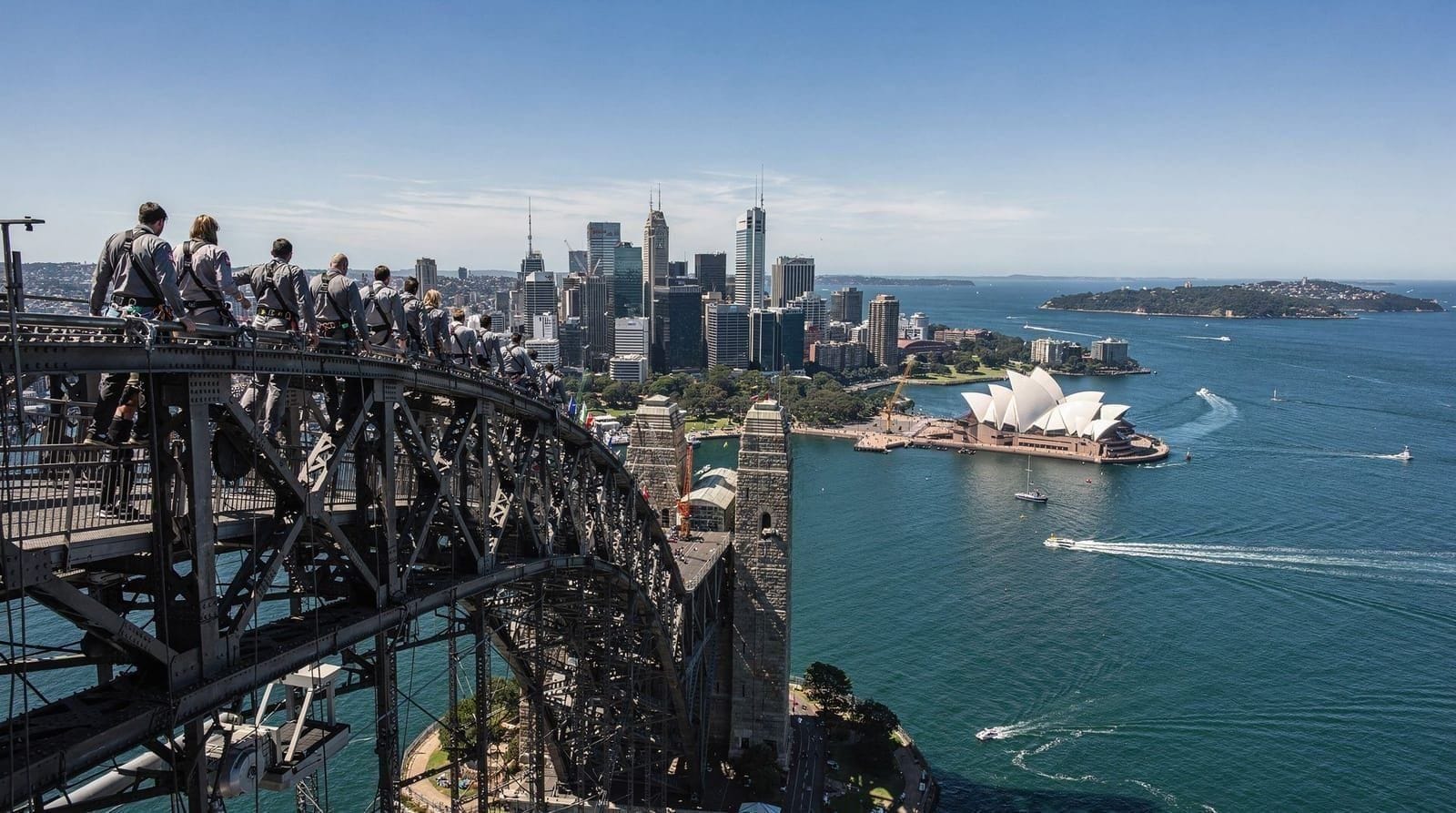
For height with a safety harness, a twilight climb over the Harbour Bridge arch gives you the city lights coming on beneath your feet. Our BridgeClimb guide explains the different climb formats, and the Sydney Harbour Bridge guide covers the bridge itself.
For speed on the water, a jet boat ride across the harbour is the closest thing to a rollercoaster the harbour offers. Compare the options in the Sydney Harbour jet boat guide before you book.
For a view from above without jumping, the scenic flights guide, the helicopter tours guide and the seaplane guide all show the coastline and harbour from the air, with your feet comfortably inside the aircraft.
Combining with other activities
Wollongong is on the route to Jervis Bay (3 hours further south) and near the Royal National Park (30 minutes north along the coast). A coastal day trip — skydive in the morning, Grand Pacific Drive in the afternoon — works well for visitors with a car.
The scenic road itself is described in the Wollongong Grand Pacific Drive guide, and the Royal National Park destination page is a good stop for a walk once your nerves have settled. If you want to go further south, the Jervis Bay day trip guide shows how to stretch the coast into a longer outing, and the best day trips from Sydney page lists other options if you prefer a different direction.
A jump also fits into a longer stay. The Sydney 7 days and surroundings itinerary leaves room for a day outside the city, and the Sydney travel tips page is a useful companion for planning the rest of the trip. Whichever route you choose, keep the jump day light on other commitments: the waiting around, the weather checks and the adrenaline comedown all make it a day best enjoyed without a tight schedule.
For more adventure options around Sydney, see Sydney harbour kayaking, Port Stephens sand dunes and 4WD, and the Sydney coastal hikes guide.
Top experiences
Bookable activities with verified prices and instant confirmation on GetYourGuide.