Vivid Sydney 2024 — what actually worked and what didn't
A festival of light, crowds, and hard-won lessons
Vivid Sydney ran from 24 May to 15 June 2024, and if you made it through without at least one moment of genuine frustration, you were either incredibly lucky or you stayed home after 9 pm. That said, when the light installations lit up the Opera House sails on a clear night with no cloud and a westerly pushing out the fog, there was genuinely nowhere else in the world you’d rather be.
This is a recap of what we experienced, what surprised us, and what we’ll do differently next time. Not a tourism board summary — an honest account of a three-night run through Sydney’s biggest winter event.
At a glance
| When | Late May to mid-June each year (2026 ran 22 May to 13 June; 2027 runs 28 May to 19 June) |
| Cost | The outdoor light program is free; food/drink around the harbour runs high |
| Getting there | Walkable around Circular Quay/Barangaroo; free shuttle buses connected Chatswood in 2024 |
| Best time of evening | Arrive by 6:45–7pm on a weeknight; avoid Saturdays if you want to move freely |
| Best nights | Tuesday/Wednesday in the first or final week — see our ranking below |
The Opera House sails: worth every effort
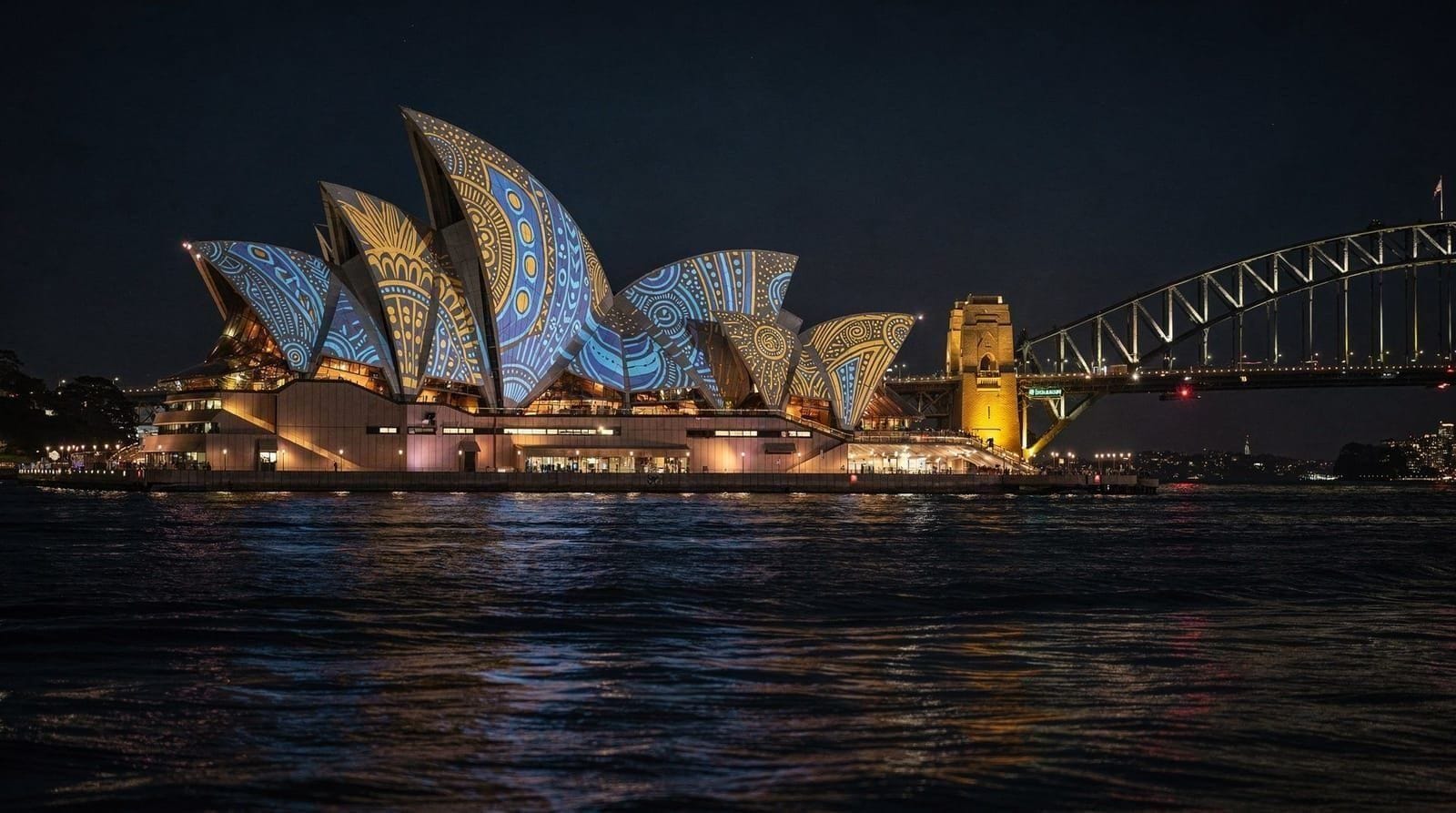
The projection mapping on the Opera House was the undisputed highlight of 2024. The theme — a collaboration with several First Nations artists — brought something more layered and emotionally resonant than previous years’ geometric spectacles. The full show cycle ran about eight minutes and repeated continuously, so you didn’t need to arrive at an exact time.
The problem, as always, was positioning. The best vantage point is from the upper concourse of Circular Quay — specifically the section opposite the ferry wharves. But by 7:30 pm on a Friday, that strip was so packed you couldn’t take two steps without hitting someone. We arrived at 7 pm and managed a reasonable spot. By 8:30 pm the crowd density had roughly doubled.
Our honest recommendation: go on a Tuesday or Wednesday in the first week, arrive by 6:45 pm, and walk east past the ferry wharves to find the pocket of space near the Museum of Contemporary Art steps. It’s slightly further from the sails, but you can actually move.
The Harbour Bridge light walk
New to 2024 was an extended illuminated walkway across the Harbour Bridge — part of the BridgeClimb experience but also visible from below at Milsons Point. Looking up from Kirribilli at the lit pylons reflecting in the water was one of the best free moments of the entire festival.
If you wanted the actual climb experience during Vivid, the twilight BridgeClimb bookings sold out early but were quietly releasing cancellations most days at 6 am — we snagged two twilight spots on 36 hours’ notice that way.
Chatswood: underrated, under-attended
We spent one night entirely in Chatswood rather than the harbour precinct, and it was the most pleasant evening of the three. The crowds were thinner, the installations were genuinely ambitious, and you could sit on a bench and watch a light show without being jostled. The precinct focused on music and interactive pieces — our kids (7 and 9) preferred it strongly to the harbour.
This is worth flagging because Vivid’s official marketing still centres everything around Circular Quay, which skews people’s planning. The free shuttle buses to Chatswood ran every 12–15 minutes from Town Hall, and the trip took under 20 minutes.
The Darling Harbour problem
We went to Darling Harbour on a Saturday night. Once. We don’t regret learning the lesson, but we do regret how long it took to escape. The bottleneck around the IMAX/SEA LIFE stretch was essentially impassable between 8 pm and 9:30 pm. The installations themselves were fine — some of the harbour reflections were beautiful — but the management of foot traffic was poor, and the walk from Town Hall to Pyrmont Bridge took 40 minutes when it should take 10.
If you’re doing Darling Harbour, go before 7 pm or after 10 pm. Or do it by water taxi from Circular Quay and skip the land approach entirely.
Eating and drinking: the real cost
Vivid pricing around the harbour is brutal. A basic burger at a pop-up near Circular Quay ran A$22 in 2024. Wine by the glass at the outdoor bars started at A$14 for something unremarkable. This is not unusual for festival pricing in Sydney, but it adds up fast over three evenings.
Our workaround: eat before you go. The restaurants in Surry Hills and Newtown were excellent value on Vivid nights because half of Sydney had decamped to the harbour. We ate well at 6 pm, arrived at the festival around 7:30 pm, and kept spending to one or two drinks maximum.
If you’re budget-conscious, check our honest Sydney budget guide — festival weeks are a good time to avoid the tourist-trap strips entirely.
Viewing from the water
The harbour views of Vivid from a boat are categorically better than any land-based spot. The downside is cost and availability — dedicated Vivid cruises book out weeks in advance, and the mass-market options feel formulaic.
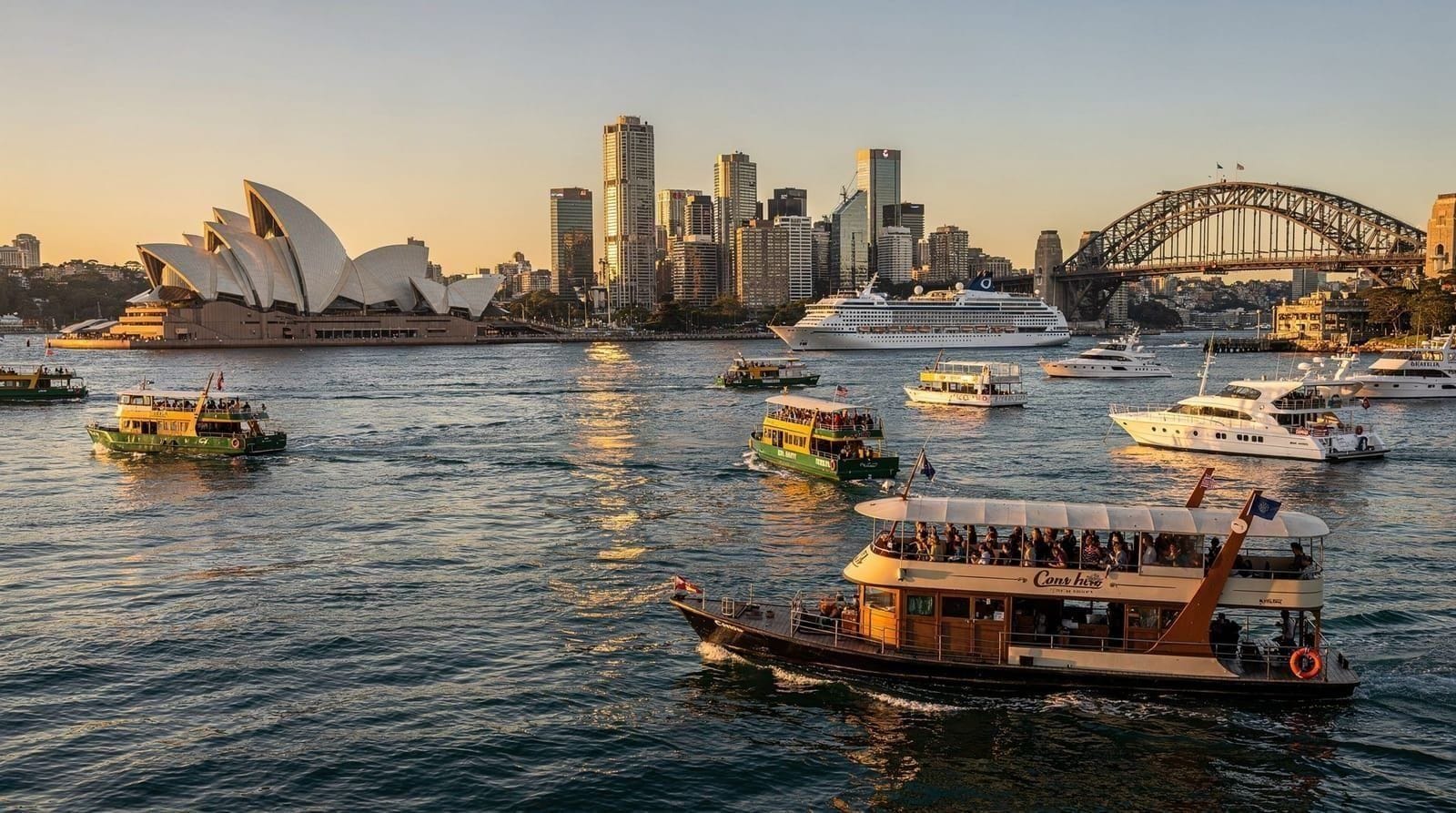
We took the regular Manly ferry at 9 pm on a weeknight — a round trip on Opal — and had one of the best views of the festival from the upper deck as the ferry passed the Opera House and Bridge. Not a purpose-built Vivid cruise, but genuinely excellent, and the boat wasn’t particularly crowded on a school night.
The purpose-built hop-on-hop-off harbour ferry is worth the upgrade if you want structured access across multiple precincts in one evening.
Photography: what actually worked
The Opera House from Mrs Macquarie’s Chair (arriving before 6 pm to guarantee a spot on the wall), the Bridge from Kirribilli Wharf, and the reflection pools at Darling Harbour before the crowds arrived. The Chatswood installations were far more photogenic for close-up work because you could actually get near them.
For phone cameras, the key is getting your phone off “auto” for white balance — the warm golds of the installations photograph beautifully at around 3500K, but auto mode tends to overcorrect toward cool blue.
What to expect at Vivid 2025
Dates weren’t announced at time of writing, but Vivid consistently runs late May to mid-June. That window coincides with the best winter weather in Sydney’s seasonal calendar — school holidays haven’t started, the rain usually holds off, and temperatures in the 14–19°C range are perfect for evening walking.
Book harbour-adjacent accommodation by March if you want to stay within walking distance. Alternatively, base yourself in Surry Hills or Newtown — both have easy train/bus access to the festival precincts and nightly rates that don’t triple for the festival period.
The Vivid Ideas and Music programs
Vivid is not only a light festival — the Ideas and Music programs run simultaneously across the three weeks, and they’re both worth engaging with on their own terms.
The Ideas program in 2024 featured a solid lineup of technology, design, and sustainability speakers across venues at the ICC Sydney and Australian Technology Park in Eveleigh. The tickets were typically A$20–45 for individual sessions and genuinely delivered at that price point. The talks that drew the most word-of-mouth were the panels on First Nations storytelling and technology — a natural thematic extension of the visual art program’s direction.
The Music program at various harbour and inner-city venues was more variable. The headline international acts were excellent but sold out months in advance. The smaller venue program — at the Metro, Oxford Art Factory, and various Newtown venues — had excellent acts with same-week ticket availability. If you’re going to Vivid for the music, plan the headliners well in advance and treat the smaller venues as a bonus.
What the free program actually covers
Everything you see walking the harbour, Chatswood, Barangaroo, Darling Harbour, and the other precincts is free. There is no entrance fee for the light walk. The projection on the Opera House is free. The interactive installations are free. The entire outdoor program costs you nothing beyond transit.
This is remarkable for what is objectively a world-class creative festival, and it’s easy to forget when the website lists ticketed events prominently. The paid portions (Ideas sessions, Music ticketed shows, BridgeClimb, specific venue events) are opt-in additions to a free core program.
This also means Vivid is genuinely accessible across income levels in a way that most major cultural events are not. You can spend three evenings at Vivid spending nothing other than a meal and an Opal top-up. Or you can spend A$400 on a BridgeClimb plus Vivid cruise plus dinner. Both are legitimate approaches to the same festival.
The Best Night: An Honest Ranking
After three evenings and several conversations with people who’d been doing Vivid for years, here’s our actual ranking of the three nights we attended:
Night 1 (Tuesday, first week): The clear winner. Smaller crowds than the second week, no school holiday traffic yet, installations at their freshest, guides and volunteers at their most engaged. We saw the Opera House projection twice, walked Barangaroo, ate well in Surry Hills beforehand, and got home by 10:30 pm without stress. Cost: approximately A$42 for two adults (dinner + two drinks + Opal).
Night 2 (Friday, second week): The necessary learning experience. We went to Darling Harbour. We’ve covered this already.
Night 3 (Wednesday, final week): Good, with a different energy — the locals come back for the closing days, and there’s a different quality to the crowds. We spent this night in The Rocks precinct and walked across to the Opera House for the final show, staying until nearly 11 pm to watch the last cycle. The walk back to Town Hall station through largely emptied streets felt like claiming the city back.
Planning for the people you’re travelling with
One thing that changes Vivid significantly: whether you’re going with a crowd-tolerant person, a crowd-intolerant person, or a mix.
For crowd-tolerant adults: Saturday nights are manageable if you have a plan. The energy is remarkable. Accept that you’ll be slow and go with it.
For children under 8: Chatswood and the interactive installations. Early evenings (6–8 pm). Not the Opera House on a weekend, ever.
For anyone with mobility needs: the Barangaroo foreshore is the most accessible precinct — flat, wide, well-lit, and good viewing without needing to navigate crowds. The Circular Quay waterfront west is next best; avoid the east (Opera House) side on weekends entirely.
For photographers: early evening, before 7:30 pm. Mrs Macquarie’s Chair for the Opera House. Kirribilli Wharf for the Bridge. Chatswood installations any time because you can actually get close.
Final verdict on 2024
The art direction was stronger than 2023. The crowd management was about the same — which is to say, challenging on weekends. The free content (everything except the ticketed Music/Ideas programs) was genuinely impressive for a free festival.
If you’re planning to attend next year, the formula is: avoid Saturdays, build in two evenings minimum, use the off-harbour precincts as pressure valves, and spend your food budget before you arrive.
The sails of the Opera House reflecting light designed in collaboration with Biripi, Wiradjuri and Gadigal artists is exactly the kind of thing that justifies Sydney’s claim to being one of the world’s great festival cities. When it works, Vivid is extraordinary. Plan carefully and it will work.
Precinct comparison for planning your evenings
| Precinct | Crowds | Best for | Access |
|---|---|---|---|
| Circular Quay / Opera House | Very high, especially weekends | The signature projection show | Walkable from Town Hall; ferry from Manly for a water view |
| Chatswood | Low | Music, interactive pieces, families with young kids | Free shuttle from Town Hall, under 20 minutes |
| Darling Harbour | High, poorly managed foot traffic | Reflections in the harbour, if you go before 7pm | Walk from Town Hall or take a water taxi/ferry |
| Barangaroo | Moderate | Accessible, flat viewing for mobility needs | Walkable from the CBD |
| The Rocks | Moderate, thinner by the final week | Closing-week atmosphere | Walkable from Circular Quay |
For the official program overview and dates, see the Vivid Sydney guide. If you’re weighing a dedicated cruise against a regular ferry for harbour views, our Sydney harbour cruises guide breaks down the cost difference in more detail.
A couple of questions people ask
Do I need to buy tickets for Vivid Sydney? No — the outdoor light installations, the Opera House projection, and the walking precincts are entirely free. Only the Music program’s ticketed shows, some Ideas talks, and add-ons like BridgeClimb require booking.
What’s the best single night to go if I can only manage one? A Tuesday or Wednesday in the first or final week, arriving by 6:45pm at Circular Quay before the weekend crowds build. See our night-by-night ranking above for the reasoning.