Kings Cross then and now — what happened to Sydney's most famous nightlife precinct
Sydney: Harbour BridgeClimb summit twilight
Duration: 3 hours
Is Kings Cross still worth visiting in Sydney?
Kings Cross is a quieter, more residential neighbourhood than it was before 2014. The megaclubs and the chaotic Strip scene are mostly gone. What remains is a compact neighbourhood with good cafes, some excellent bars (The Kings Cross Hotel, Barrio Chino), the El Alamein Fountain, and a history that is genuinely interesting. Worth an afternoon or early evening visit; no longer a night-out destination in itself.
At a glance
| Where | Kings Cross, just over 1 km east of Circular Quay / the CBD |
| Cost | Free to walk around; drink prices vary by venue |
| Time needed | 1–2 hours for a walk and a drink; half a day if combined with Darlinghurst/Potts Point |
| Getting there | Kings Cross train station (Eastern Suburbs line), or a 15–20 minute walk from Circular Quay |
| Best time | Late afternoon to early evening; avoid expecting a big-night-out scene |
What Kings Cross was
Kings Cross is a small ridge at the eastern edge of the Sydney CBD, just over a kilometre from Circular Quay, occupying a strategic urban position that has made it a concentrated zone of commercial entertainment since at least the 1920s. At its peak — from the 1970s through to the early 2010s — it was one of Australia’s most infamous entertainment precincts: adult clubs, strip venues, nightclubs with global reputations, drug markets, sex work, and an intensity of late-night activity that had no equivalent in any other Australian city.
The Strip (Darlinghurst Road) was the main artery. Venues including Gas Nightclub, The World Bar, The Exchange Hotel and dozens of others drew thousands of visitors nightly from Sydney’s suburbs and from tourists staying nearby. The noise, the activity, the excess — Kings Cross occupied a specific place in the Australian cultural imagination as the place where normal city rules didn’t fully apply.
What the lockout laws changed
In January 2014, the New South Wales government introduced lockout laws for the Kings Cross and Sydney CBD entertainment precincts. The core provisions:
- No new patrons admitted after 1:30 am at venues in the lockout zone
- Alcohol service to end at 3 am
- The rules applied to Kings Cross, the CBD strip, and surrounding areas
The legislation followed two high-profile deaths from unprovoked street assaults and was politically driven by a moment of public outrage. Supporters argued it was a necessary public safety measure. Critics — including the music industry, venue operators and a coalition of creative workers — argued it was disproportionate, targeted a specific precinct rather than addressing problem venues specifically, and would cause enormous economic damage.
Both were right. Alcohol-related violent incidents in the lockout zone fell significantly (between 2014 and 2016, assaults dropped approximately 40% in the designated area). And the economic damage was severe: the City of Sydney’s own research estimated a 40% drop in foot traffic in the Kings Cross precinct; dozens of venues closed within two years; the precinct’s reputation shifted from entertainment destination to avoided zone.
What Kings Cross looks like today
The most immediate visual change for a visitor arriving at Kings Cross train station and walking up the hill is the quiet. Darlinghurst Road, which on any given Saturday night in 2012 would have been a dense, noisy press of people, is in 2026 a normal inner-city street with café tables and parked cars.
Several of the large venues that defined the Strip are gone or converted:
- The Goldfish Bar (formerly a major nightclub) is now residential apartments
- Gas Nightclub is closed
- The former Porky’s site is now different commercial premises
- The strip club and adult venue concentration on the upper part of Darlinghurst Road has thinned to a few remaining operations
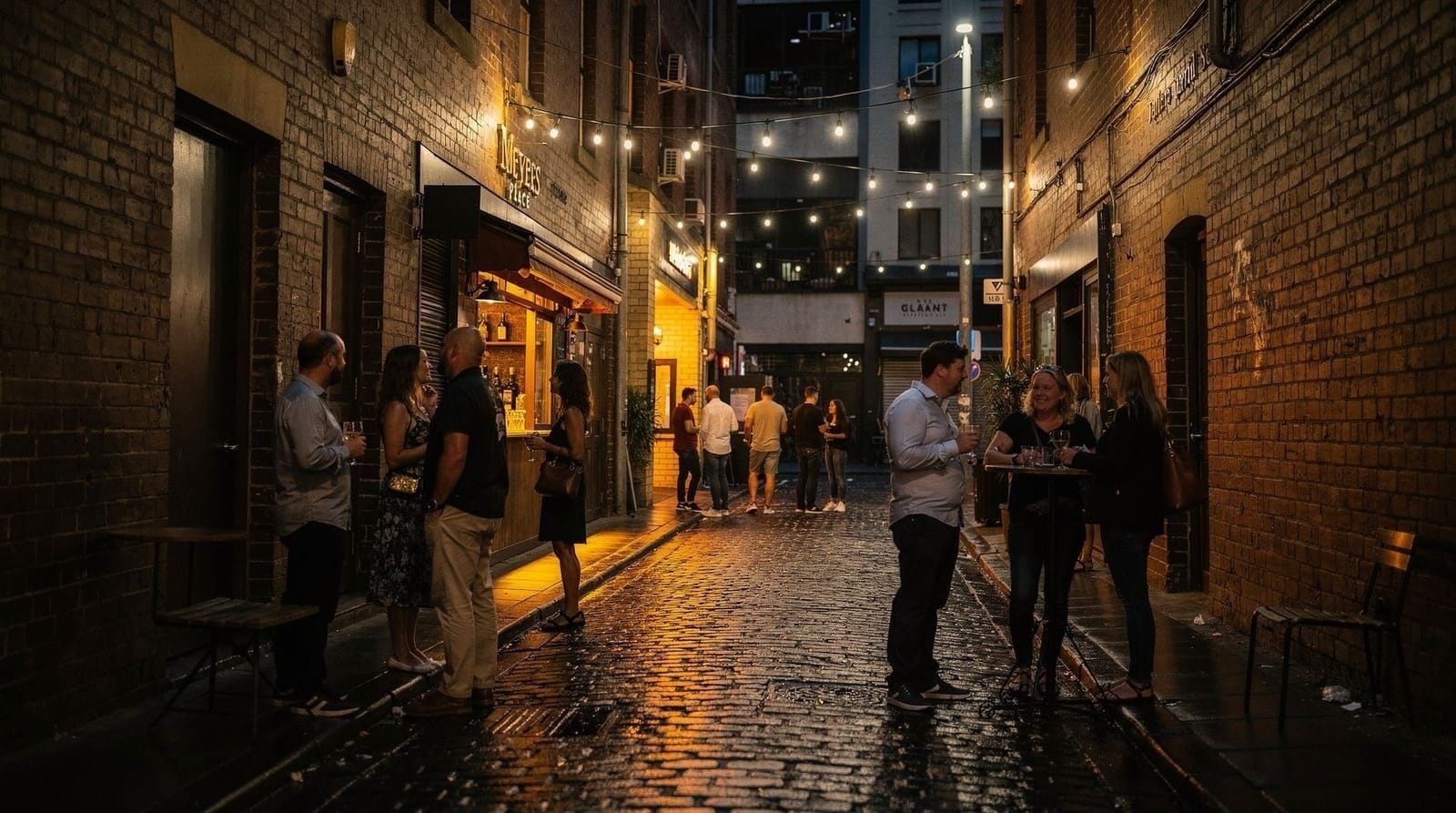
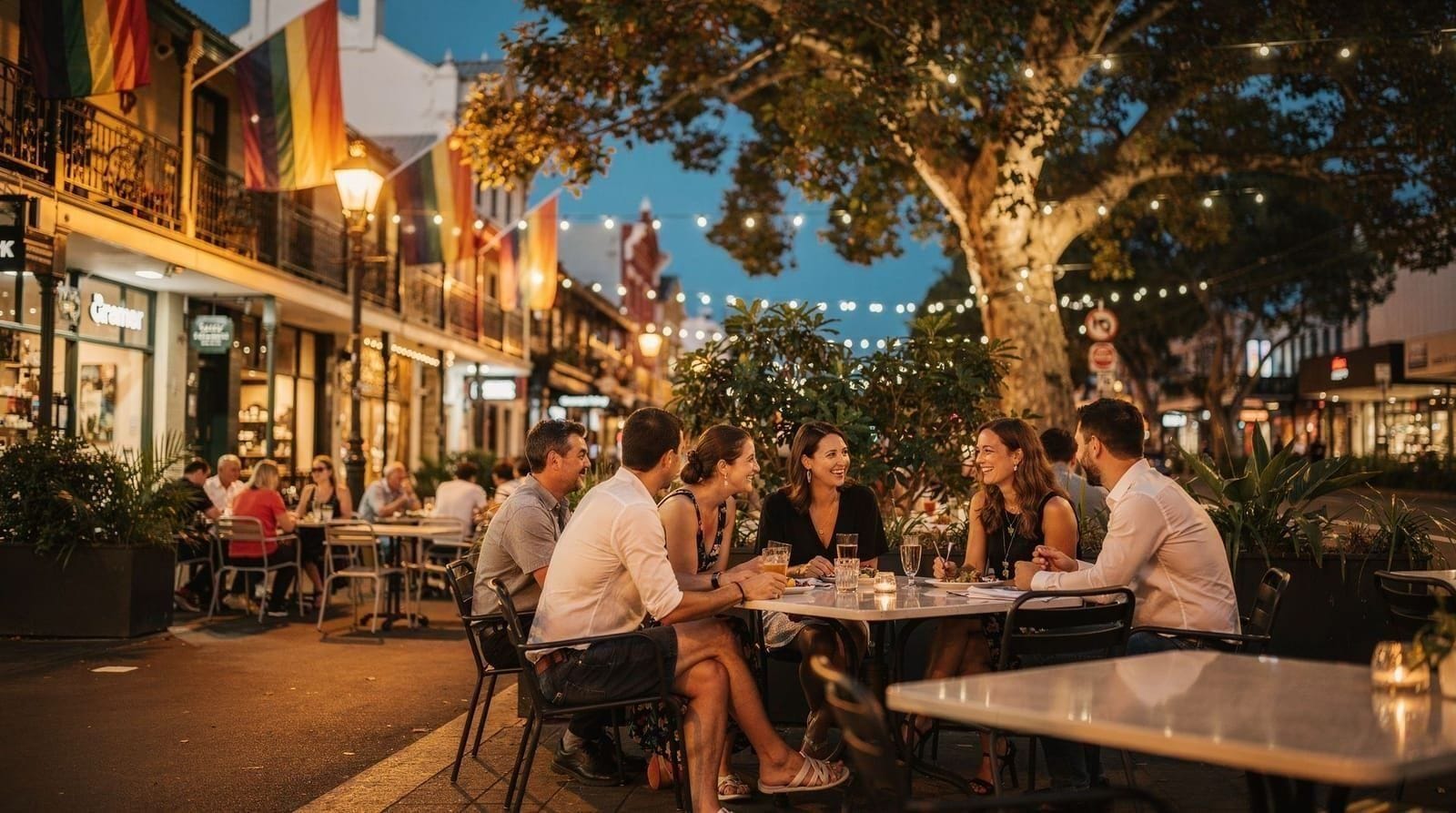
What replaced the nightclub economy is a mixture of residential conversion, cafes, boutique hotels and a calmer bar scene. The El Alamein Fountain — the iconic dandelion-shaped fountain in Fitzroy Gardens at the top of the Cross — remains, now surrounded by café tables rather than nightclub queues.
What still operates
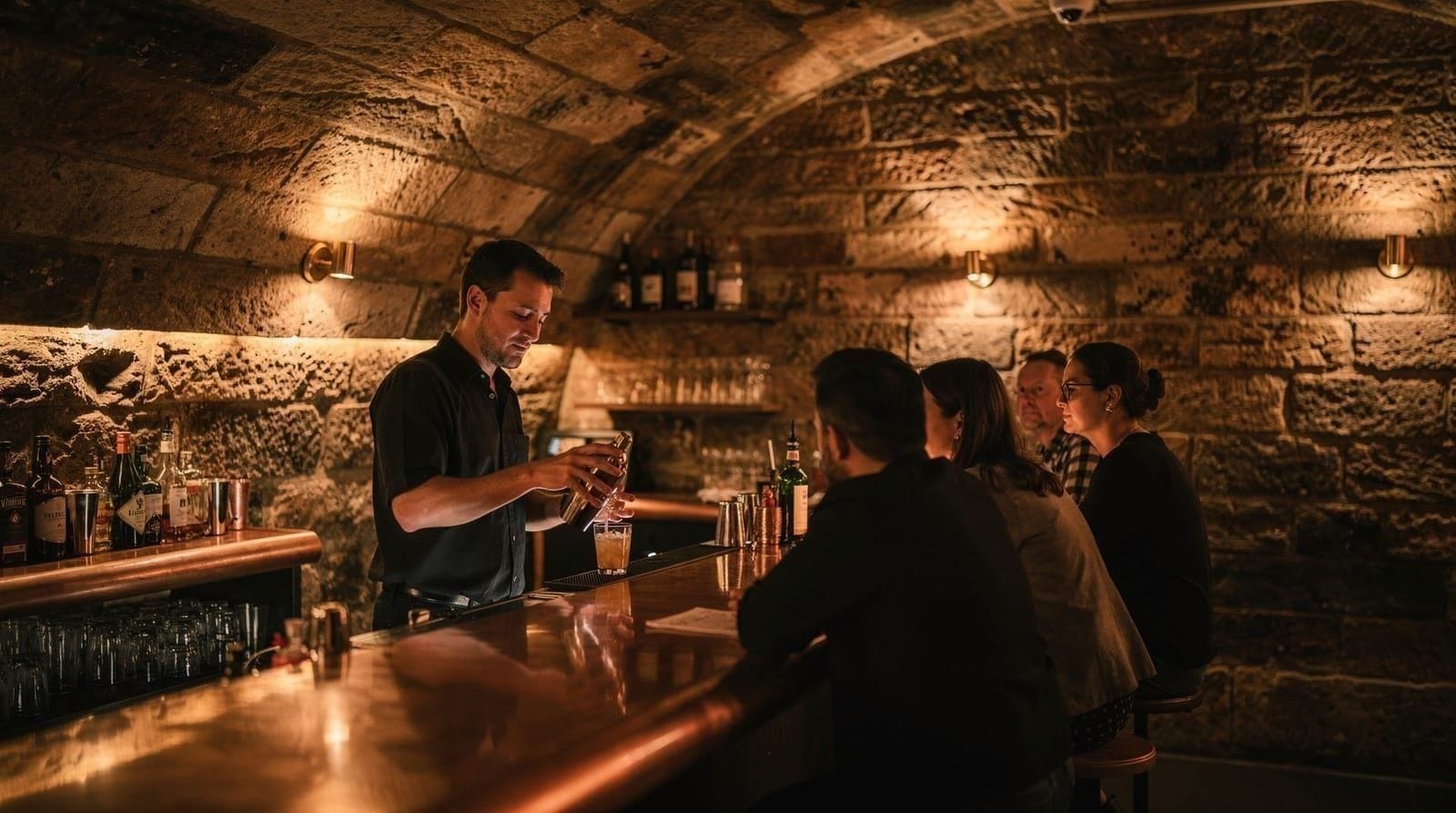
The Kings Cross Hotel: One of the area’s long-standing venues, substantially reformed and now operating as a pub-bar hybrid with some live music.
Barrio Chino: A bar on Darlinghurst Road serving decent cocktails and Mexican small plates. Represents the newer, quieter face of Kings Cross hospitality.
The World Bar: Partially reopened in modified form; check current status. One of the original large venues that partially survived the lockout law period.
New cuisine: The Kings Cross area has seen a restaurant layer emerge partly as a result of the nightlife retreat — Korean BBQ on Victoria Street, Italian restaurants on Darlinghurst Road, Thai on William Street.
The repeal (2020–2021)
The NSW government lifted the lockout laws in two steps:
- The CBD and Oxford Street from 14 January 2020
- Kings Cross from 8 March 2021, with last drinks moved back to 3:30 am
The repeal has allowed some new venues to open in the Kings Cross area and stabilised the decline. But it has not reversed the structural changes — many of the large venues that closed during 2014–2020 stayed closed because the buildings were converted or the operators had moved on.
Why Kings Cross history still matters for visitors
Kings Cross has a specific place in Sydney’s social history that extends well before the nightclub era. It was a bohemian district from the 1920s (artists, writers, the early café scene); it housed many of Sydney’s Jewish and European immigrant communities post-WWII; it was the city’s primary zone of sex work and underground activity for decades; and it was where the heroin epidemic hit hardest in the 1980s and 1990s.
The Wayside Chapel (on Hughes Street, since 1964) is a visible remnant of the area’s social welfare history — still operating, still serving the community. The El Alamein Fountain (1961) is a public work with its own wartime memorial history. The literary connections — Kenneth Slessor, Christina Stead, many others wrote about or from Kings Cross — make it an interesting place for anyone with a Sydney literary interest.
Kings Cross in context
To understand why the lockout law debate was so contentious in Sydney, it helps to understand that Kings Cross was not simply a party district — it was a neighbourhood with a complex social ecology. The loss of the nightlife economy also removed a liveability context from the area’s sex work community, underground arts scene and social services infrastructure in ways that the violence statistics don’t capture.
For a complete picture of how the Sydney nightlife scene redistributed itself post-2014, see the Sydney nightlife guide and the Sydney best bars guide. The LGBTQ+ element of Kings Cross and the adjacent Oxford Street scene is covered in the Sydney LGBTQ+ scene guide.
Nearby neighbourhoods worth pairing with a Kings Cross visit
Kings Cross sits within easy walking distance of several neighbourhoods that make more sense as a combined half-day than as a standalone destination. Surry Hills, a 20–25 minute walk or short bus ride south, has taken over much of the interesting bar and restaurant energy that Kings Cross lost after 2014. Paddington, a little further east, offers Victorian terrace architecture and boutique shopping that contrasts sharply with the Cross’s grittier history. If you’re building a longer inner-city itinerary, Newtown on the opposite side of the CBD gives a comparable but distinct alternative-culture neighbourhood experience.
For visitors specifically interested in the architectural and social history angle, the Sydney architecture walk guide covers some of the same Art Deco and interwar buildings that give Kings Cross its visual character, and cheap eats in Sydney points to some of the newer, lower-key food options that have replaced the old nightclub strip.
A short self-guided walk
A practical way to see Kings Cross without wasting time: start at Kings Cross train station, walk up Darlinghurst Road past the site of the old strip clubs to the El Alamein Fountain in Fitzroy Gardens (10 minutes), continue down Macleay Street towards Potts Point for the boutique cafe strip (15 minutes), then loop back via Victoria Street. The whole circuit takes about an hour at an unhurried pace, plus however long you stop for a coffee or a drink. It works equally well in daylight (for the history and architecture) or early evening (for the current bar scene).
Reading the street as you walk
Kings Cross rewards slow walking more than any itinerary. The layers are visible if you know where to look: the interwar apartment blocks that date from the bohemian years, the shopfronts that have changed use three or four times, and the odd surviving sign from the nightclub era sitting above a café or a convenience store. Look up rather than at street level, because the upper storeys often preserve details that the ground floor lost long ago.
It also helps to hold two ideas at once. The neighbourhood was a place of real harm for some of the people who lived and worked there, and it was a place of real community and creativity for others. Neither version cancels the other. Visitors who arrive with only the sensational reputation tend to find the area underwhelming, while those who arrive curious about the people behind the reputation tend to find it far more interesting. The Wayside Chapel and the quiet residential side streets are good places to feel that second story.
Before or after the Cross: pairing it with something bigger
Because the neighbourhood is a short outing rather than a full day, it pairs well with a headline activity elsewhere in the city. If you want a view that puts the whole inner city in perspective, the BridgeClimb guide explains the options, and a twilight climb over the Harbour Bridge is one way to end a day that began with a history walk. For something quieter on the water, Sydney Harbour kayaking is the natural counterpart, and an early start on a sunrise paddle on the harbour leaves the evening free for a slow wander up to the Cross.
Visitors interested in the deeper human history of the city can also look beyond the nightlife story. The land around Sydney Harbour has a much longer past than any nightclub strip, and the Sydney Aboriginal heritage guide is a good starting point. A guided option such as an Aboriginal walking tour with a smoking ceremony puts the Cross’s story into a far longer timeline, and the Aboriginal cultural tours guide compares the other choices.
Where to eat and drink after the walk
The restaurant layer that replaced the clubs is the most practical reason to stay a little longer. Rather than hunting for a single famous address, walk the side streets and read the menus in the windows; the mix of cuisines is the neighbourhood’s current personality. For a more polished evening, the Sydney best restaurants guide and the Sydney rooftop bars guide cover other parts of the city if the Cross does not suit your mood. If you would rather start with coffee, the Sydney coffee culture guide explains what to expect from the local cafe scene.
Getting around safely and sensibly
The area is easy to reach by train, and the walk from the CBD is straightforward, so you rarely need a car. The getting around Sydney guide and the Opal card guide cover the practicalities. If you plan to stay out late, it is worth reading the Sydney safety guide first, and planning your route home before you settle into a bar rather than after. For a wider view of how the city fits together, the Sydney for first-timers guide places the Cross among the rest of the inner neighbourhoods.
Frequently asked questions about Kings Cross then and now
Is Kings Cross safe to visit today? Yes — the area is considerably quieter than its pre-2014 reputation, and standard city-centre precautions apply. Late at night it’s still a nightlife area with the usual crowd-related risks of any entertainment precinct, but the extreme incidents that drove the lockout laws are far less common now.
What’s the best time of day to visit Kings Cross? Late afternoon into early evening works best — you get the neighbourhood’s character (cafes, the fountain, the architecture) without needing to be out at 2 am to see anything of interest, since the big-night-out version of the Cross has largely disappeared.