Palm Beach
Guide to Palm Beach — Sydney's northernmost beach, the Barrenjoey Lighthouse hike, Pittwater, how to get there, and why it is worth the journey.
Sydney: S northern beaches and ku ring gai national park tour
Duration: 10 hours
Quick facts
- Distance from CBD
- 50 km north (1.5–2 hours by car or bus)
- Bus from Manly
- ~90 min on route B1 or 190
- Barrenjoey Lighthouse hike
- about 40 minutes each way from the car park, views of both beaches
- Two beaches
- Palm Beach (ocean) and Pittwater (sheltered, family)
- Best months
- October–April for warmth; June–August for whale watching offshore
Sydney’s end of the road
Palm Beach is the northernmost point of Sydney’s beach corridor — after this headland, you are in Ku-ring-gai Chase National Park and then the Hawkesbury River. Getting here requires commitment: roughly 50 kilometres from the CBD and 1.5–2 hours by car, or 90 minutes by bus from Manly. That distance is also its appeal. Palm Beach sees a fraction of the visitor numbers that Bondi gets, even on a warm summer weekend.
| At a glance | |
|---|---|
| Where | Barrenjoey Head, northern tip of the Northern Beaches, roughly 50 km from the CBD |
| Cost | Free to visit; optional lighthouse tour on Sundays (see the official NSW National Parks website for prices); lunch at The Boathouse around A$35–55 |
| Time needed | A full day; 1–2 nights if pairing with Ku-ring-gai or the Hawkesbury River |
| Getting there | Bus B1/190 from Wynyard or Manly (around 90–120 min) or car via Spit Bridge (1.5–2 hrs) |
| Best time | October–April for swimming; June–August for offshore whale sightings |
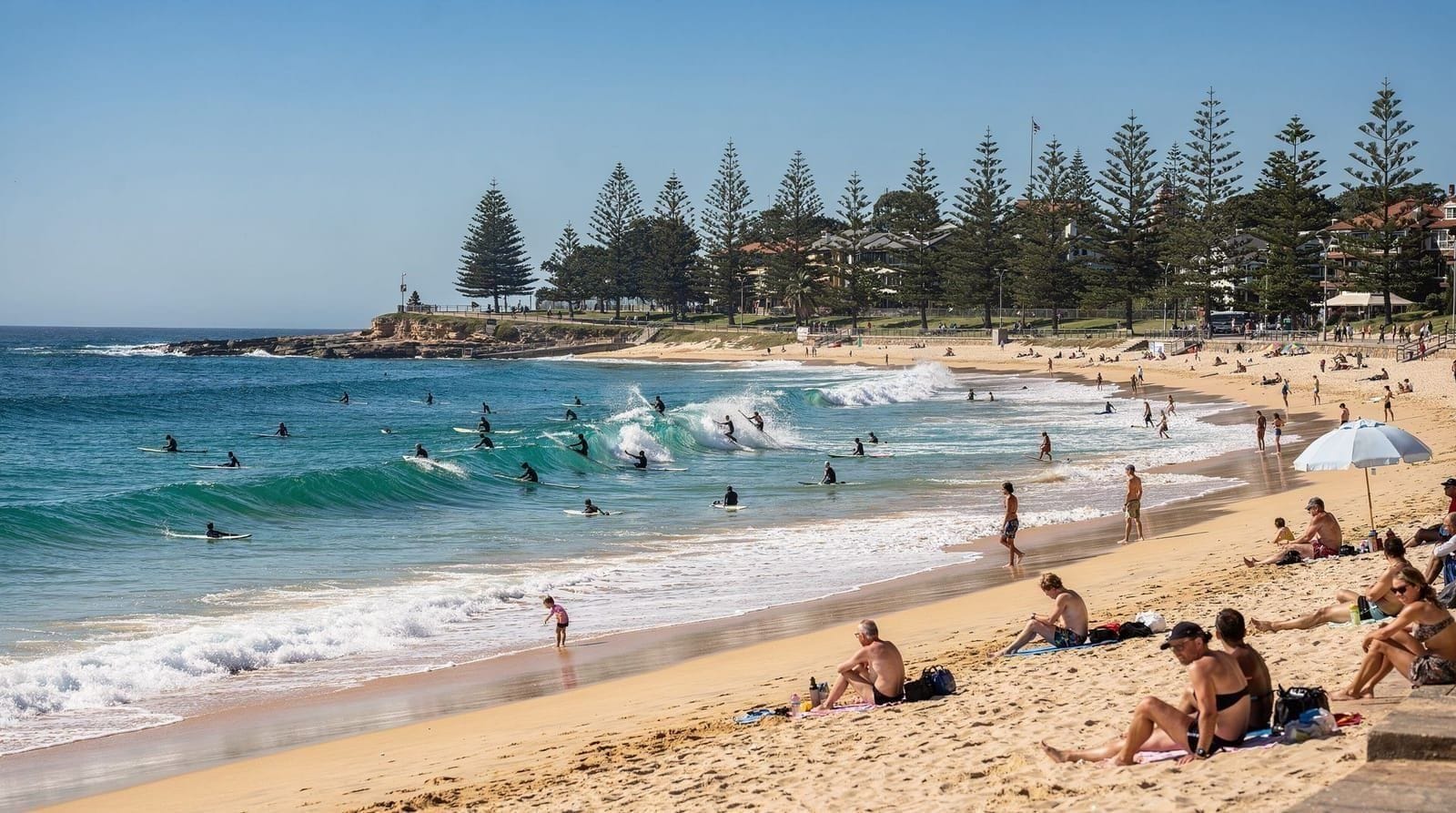
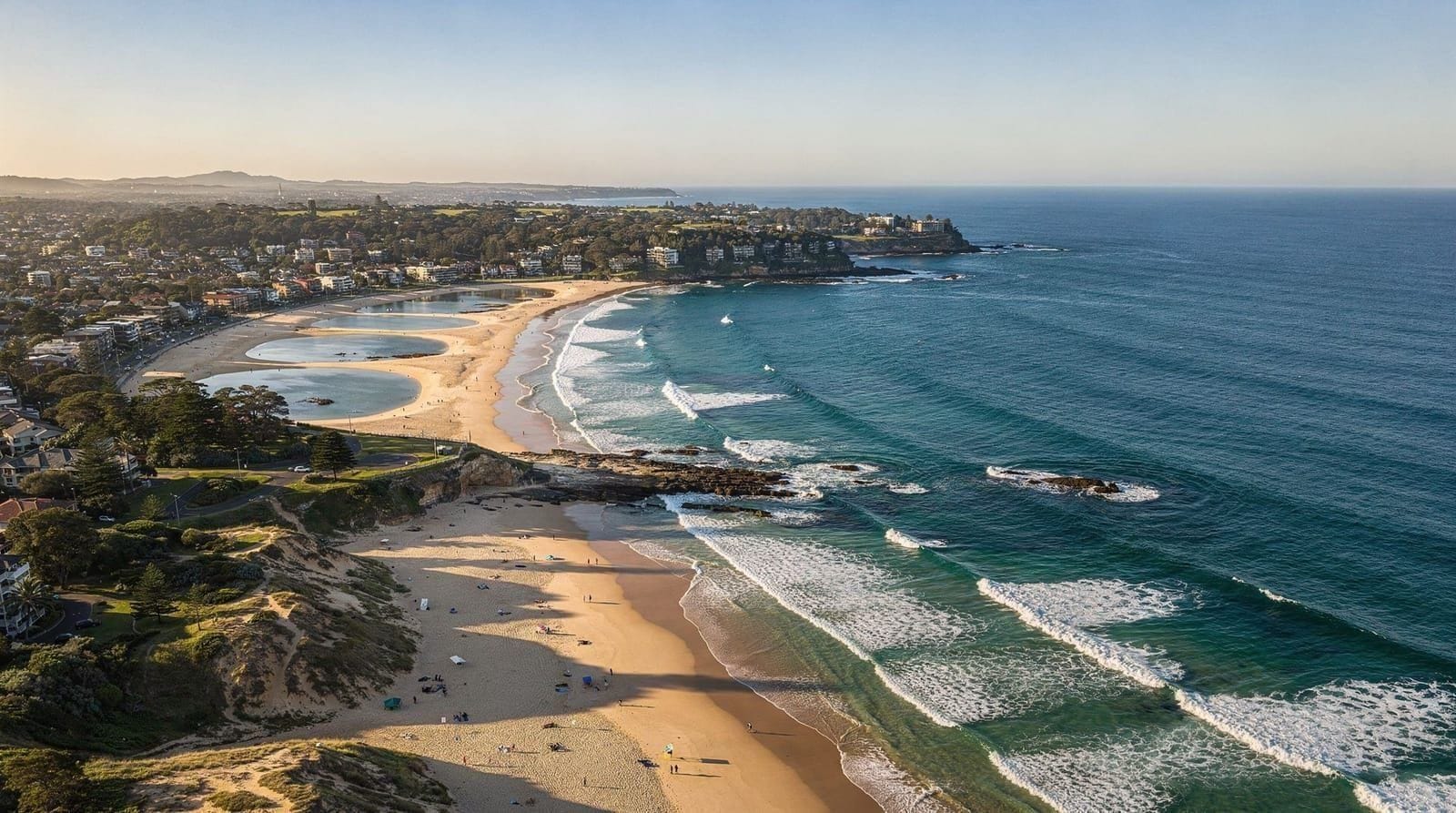
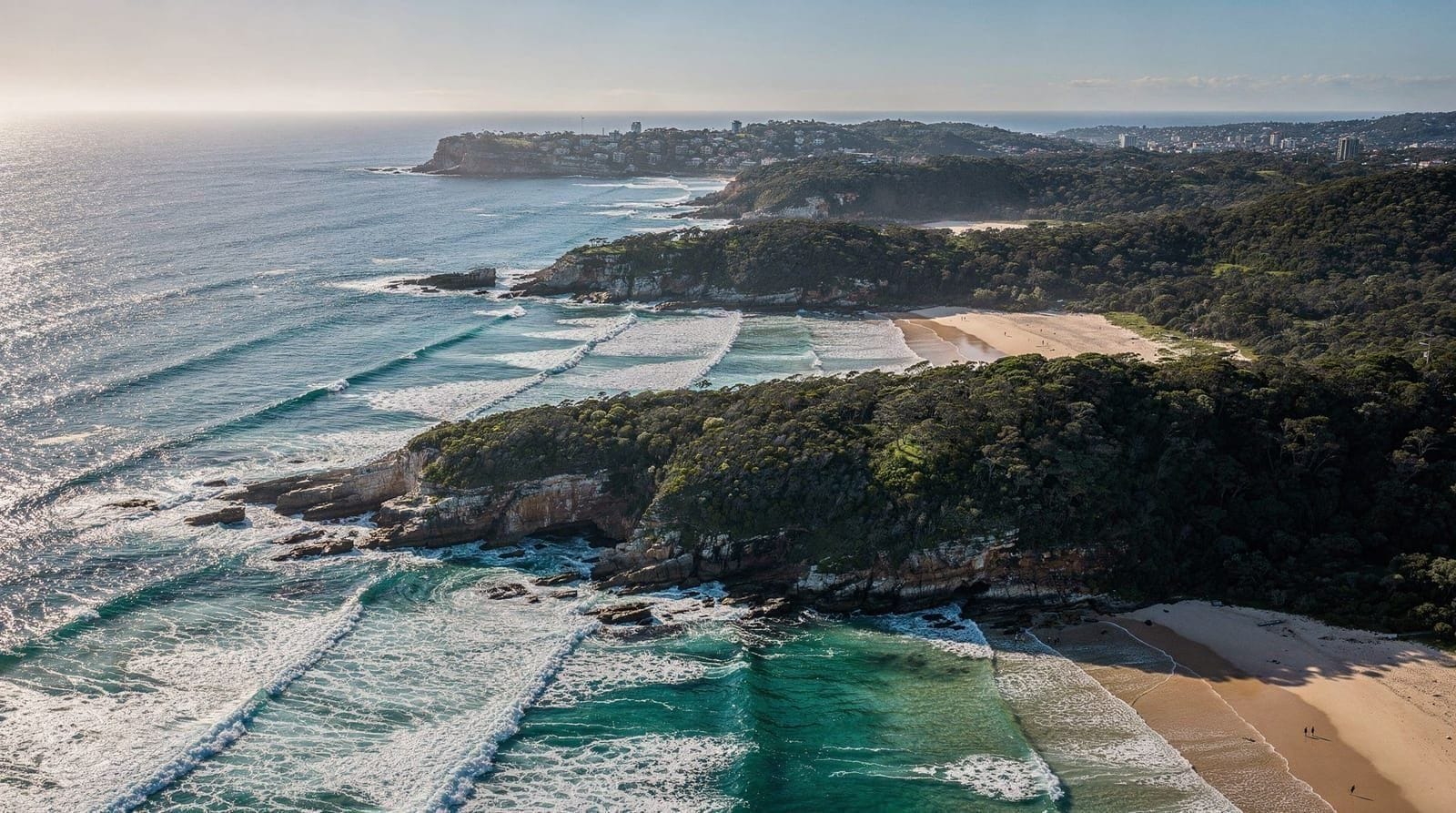
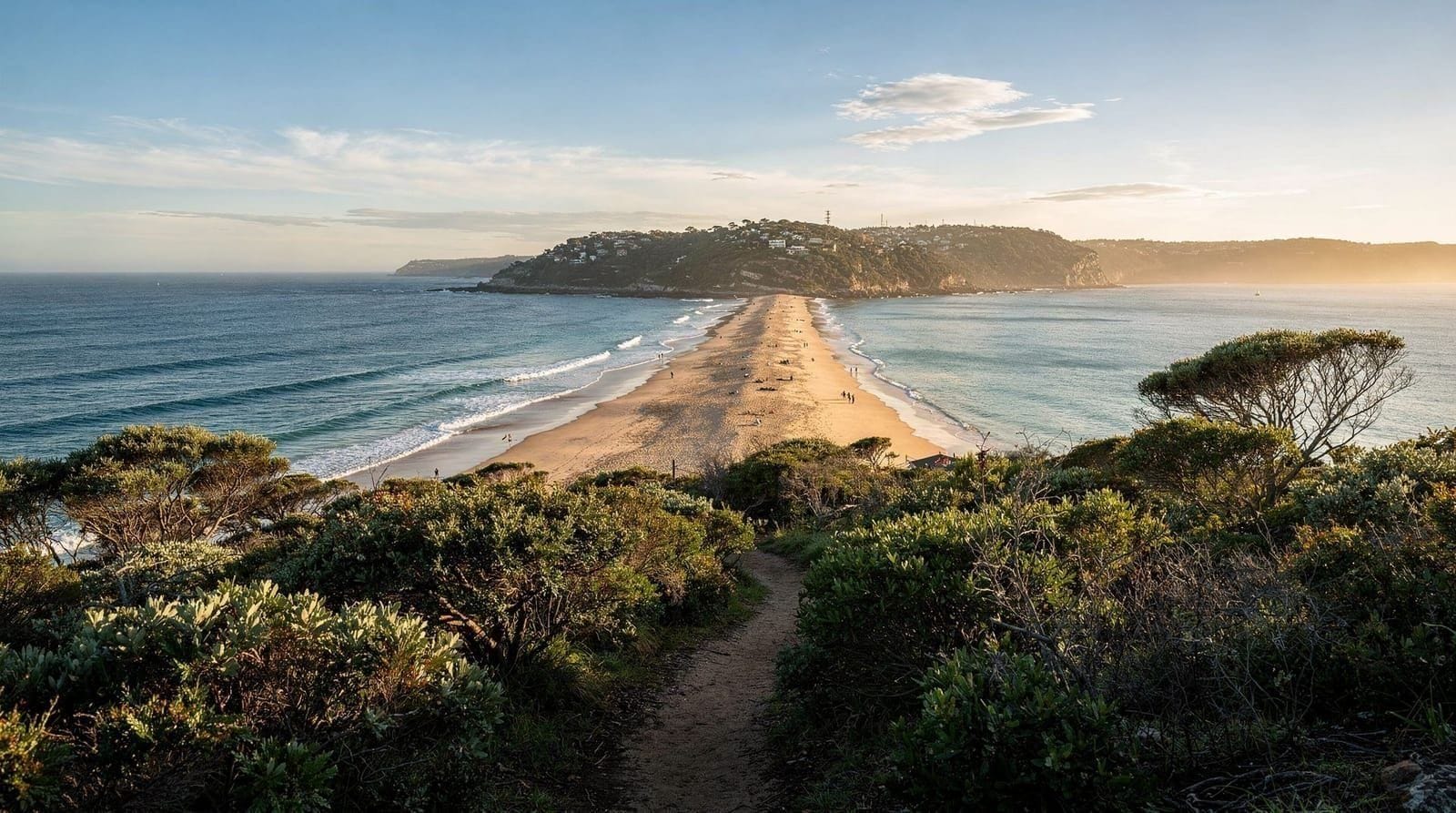
The headland that gives Palm Beach its character is Barrenjoey Head — a long sandstone promontory that creates two completely different beaches on its east and west sides. On the ocean side is Palm Beach itself, a 2-kilometre stretch of open Pacific beach with consistent surf. On the Pittwater side, the water is sheltered, flat, and sheltered enough for kayaking and small-boat sailing. From the top of the headland, you can see both simultaneously.
The Barrenjoey Lighthouse hike
The walk to Barrenjoey Lighthouse is the main reason most visitors come to Palm Beach. The trail starts at the car park at the northern end of Palm Beach (the Barrenjoey Road end) and climbs approximately 120 metres through banksia scrub to the lighthouse complex at the tip of the headland. The return distance is around 2 kilometres, and the walk takes about 40 minutes each way from the car park.
The lighthouse, built in 1881 from locally quarried sandstone, is one of the most photographed in New South Wales. NSW National Parks opens the lighthouse interior for guided tours on Sundays; check the official NSW National Parks website for times and prices. The views from the top — north to the Hawkesbury River mouth, south along 40 kilometres of Northern Beaches coastline, west across Pittwater — are genuinely among the best in greater Sydney.
Wear proper shoes; the track is partly sandstone steps and becomes slippery after rain. Carry water — there are no facilities on the track.
Palm Beach — the ocean side
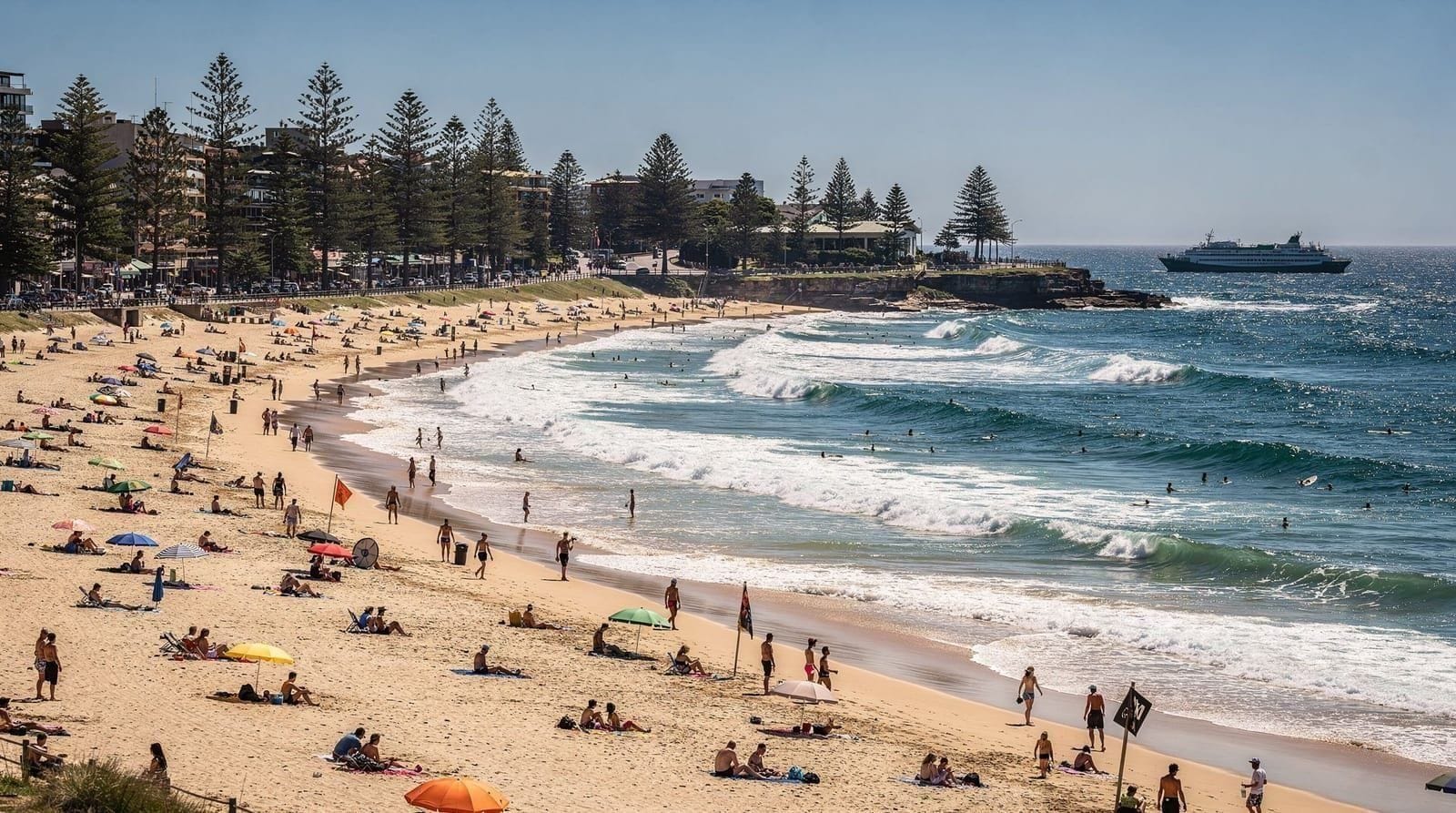
The ocean beach at Palm Beach is 2 kilometres long, backed by the low-rise houses and manicured gardens that make this one of Sydney’s wealthiest suburbs. The surf here is less consistent than the mid-Northern Beaches (Narrabeen, Dee Why) because the headland provides some shelter from southerly swells, but north and east swells produce good waves. The beach is patrolled by the Palm Beach Surf Life Saving Club, one of Australia’s oldest (established 1921).
The Avalon Beach end of the beach (accessed via Barrenjoey Road to the south) has beginner-friendly surf schools operating in summer. The northern end, near the lighthouse, tends to be rockier and less suitable for swimming.
Pittwater — the other half
Pittwater is the name for the sheltered waterway on the western side of Barrenjoey Head — effectively a large tidal inlet of Broken Bay. It is the departure point for ferries to the Ku-ring-gai Chase National Park islands and the remote communities of Scotland Island and Halls Head, which are only accessible by boat.
For day visitors, Pittwater offers calm-water kayaking, paddleboarding (hire from Palm Beach Kayaks near the wharf), and the peculiar experience of watching ferry traffic serving communities that have no road access. The Palm Beach Wharf is also the departure point for the Hawkesbury Postman ferry — a fascinating weekly mail and supply service to isolated river communities, operated by NSW Government, taking around 5 hours for the full return trip.
Eating at Palm Beach
Options at Palm Beach are limited and expensive, reflecting the suburb’s demographics. The Boathouse on Pittwater Road is the most well-known restaurant — good for a long lunch with Pittwater views, expect AUD 35–55 for mains. The Palm Beach RSL is significantly more affordable and has ocean views from its terrace. For something casual, the kiosk at the surf club handles coffee and sandwiches.
Bring food if you are budget-conscious. There is an IGA supermarket in Avalon (8 minutes south by car) where you can stock up.
Getting to Palm Beach
By bus: B1 or route 190 from Wynyard (CBD) to Palm Beach, approximately 90–120 minutes. Use Opal card or contactless. Services run roughly every 30–60 minutes.
From Manly: Bus B1 from Manly Wharf, approximately 90 minutes.
By car: 50 kilometres from CBD via Spit Bridge and Mona Vale Road. Allow 1.5–2 hours in normal traffic. Parking at the north end of Palm Beach (Barrenjoey Road) is free but limited; arrive before 9 am on summer weekends.
Book a guided Northern Beaches and Ku-ring-gai tour from SydneyThe Northern Beaches guide covers all beaches between Manly and Palm Beach with public transport details. The Palm Beach guide goes deeper on the lighthouse, Pittwater, and combining with a Hawkesbury River day. For context on the broader Northern Beaches corridor, see the Northern Beaches destination page.
The Home and Away connection — honest context
Palm Beach is widely recognised internationally as the filming location for Home and Away, the Australian soap opera that has aired since 1988. The fictional “Summer Bay” shown in the programme is Palm Beach, specifically the northern end of the beach and the headland area around the surf club. The Diner and Surf Club sets are at Palm Beach SLSC.
This draws a steady stream of international visitors — particularly from the UK and Germany — who make the journey specifically to recognise the filming locations. If this is your reason for visiting, the beach and locations are genuine and recognisable. Just be aware that the filming schedule is not public, sets are on private property, and you cannot simply walk onto an active filming location. A respectful visit at normal tourism hours is perfectly fine.
If Home and Away is not your reason for coming, the beach and lighthouse are compelling on their own terms. The TV connection is worth knowing about rather than worth building an itinerary around.
Wildlife at Palm Beach and surrounds
Palm Beach is further from Sydney’s dense urban environment than the Eastern Beaches, and it shows in the wildlife. Seasonal whale migration passes close to the headland from May to November — North Head Sanctuary (at the entrance to Manly from the south) is the city’s premier land-based whale watching spot, but the Palm Beach headland at Barrenjoey is equally well positioned. Humpback whales pass within 1–2 kilometres of the coast during the peak June–August migration.
Little penguins (the world’s smallest penguin species) nest in rock crevices along the Pittwater shoreline north of Palm Beach. They are most active at dusk when they return from the water. The area around Patonga (accessible by ferry from Palm Beach Wharf in about 20 minutes) has a small but reliable penguin colony. The ferry runs several times daily.
Peregrine falcons nest on the Barrenjoey headland cliffs. You may see them hunting above the lighthouse track, particularly in the afternoon when thermal currents rise from the warm sandstone.
The Hawkesbury River — the next step north
From Palm Beach Wharf, the Hawkesbury River Ferry (operated by a private company) runs north-west across Broken Bay and into the Hawkesbury River estuary — one of the most scenic waterways in NSW, with steep sandstone gorges, oyster farms, isolated waterfront restaurants, and communities accessible only by water. The round trip to Brooklyn (the Hawkesbury’s most accessible river town) takes around 2–3 hours. Some operators offer lunch packages.
The Hawkesbury River makes Palm Beach a genuine gateway to a different kind of landscape. For visitors who find Sydney’s beaches and harbours the primary draw but want something beyond the standard day trips, this combination — lighthouse walk, Pittwater, Hawkesbury afternoon — is one of the most interesting ways to spend a full day in greater Sydney.
What Palm Beach costs
Palm Beach is not a budget destination. A bus journey from Manly takes 90 minutes. The Boathouse restaurant (the obvious lunch choice) charges AUD 35–55 per main. The lighthouse tour is an extra paid cost (see the official NSW National Parks website).
Budget visitors can mitigate costs by bringing their own food (the Palm Beach park at the northern end of the beach has picnic tables) and limiting spending to the ferry fare. A car-free day from Manly using buses costs around AUD 9.65 (the Opal weekend daily cap) in total transport costs.
Walking the headland — beyond the lighthouse track
The Barrenjoey lighthouse trail is the obvious walk, but the headland has more to offer than the summit route. The western flank of Barrenjoey Head follows the Pittwater shore on a lower path through banksias and she-oaks to a small point where the headland meets the water. This walk (about 40 minutes return) is much less visited than the lighthouse trail and gives closer views of the Pittwater waterway and the moored yachts in the cove.
For birdwatchers, the headland scrub around the lighthouse trail holds brown thornbills, eastern spinebills, and wattlebirds year-round. Sacred kingfishers appear in summer. The lighthouse itself is home to a pair of peregrine falcons that nest in the sandstone cliff directly below the tower — visible from the lighthouse terrace if you look carefully at the cliff face.
The Palm Beach headland is also the start of the Resolute Track into Ku-ring-gai Chase National Park to the south — a 3-hour walk (one way) that follows the ridge through dense bush to West Head. This is for experienced bushwalkers with navigation skills; the track is not well-signed in sections.
Practical final notes
Sunscreen is particularly important at Palm Beach. The beach faces north-east, which means the UV exposure during the peak 10 am–3 pm window is direct. UV index regularly reaches 11+ (extreme) on summer days. Apply SPF 50+ before leaving the car park, and reapply after any swimming. Australian sun protection standards are higher than European norms — the local SPF 50+ sunscreens are genuinely more effective than equivalent products sold in Europe.
Combining Palm Beach with the rest of the Northern Beaches
Palm Beach rarely works as a standalone half-day trip given the travel time involved, so most visitors who make the journey build it into a longer loop. A common pattern: start at Manly in the morning (ferry from Circular Quay), then bus north along the coast, stopping briefly at Narrabeen or Avalon, before finishing at Palm Beach in the afternoon for the lighthouse walk and sunset over Pittwater.
This turns a single-destination trip into a full cross-section of the Northern Beaches in one day. If you would rather compare Palm Beach against the closer, easier-to-reach beaches first, the Bondi versus Manly guide is a useful gut-check on whether the extra travel time is worth it for your itinerary.
For visitors deciding between a self-drive day and public transport, the honest trade-off is time versus flexibility: the bus is cheaper and stress-free but caps you at roughly 90 minutes each way from Manly, while a car lets you detour to Avalon or West Head lookout but adds parking-hunt stress in summer.
Add-ons if you want more than the beach
If you start the day at Manly, the water beyond the surf is worth a look: a guided snorkelling session at Shelly Beach pairs well with the bus ride north later in the day. The Manly beach guide explains how that side of the peninsula works.
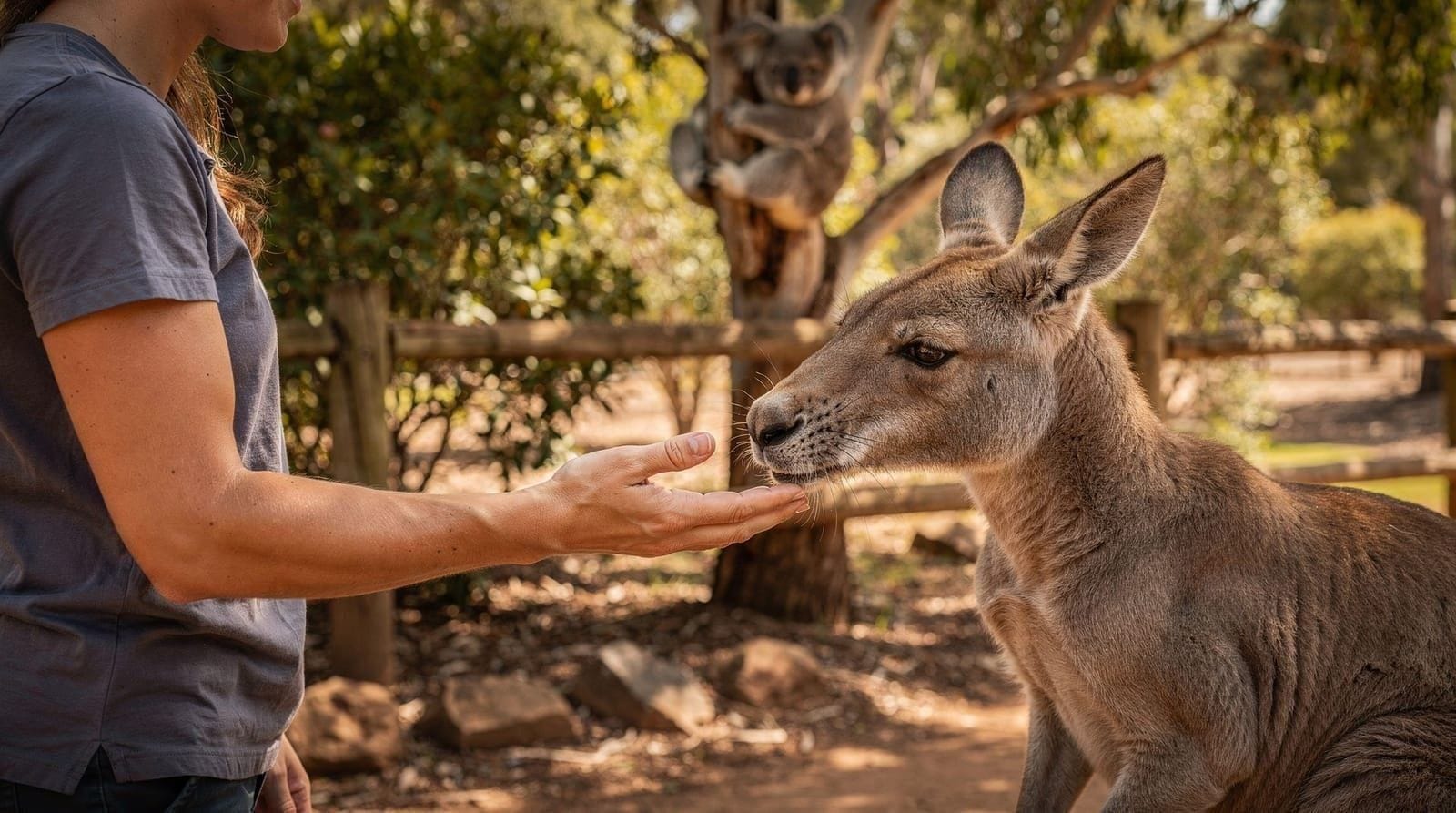
Visitors travelling with children, or anyone who wants animals rather than another beach, can look at a wildlife park and Avoca Beach trip as a separate day heading north from the city. It sits in a different direction from the Barrenjoey walk, so treat it as an alternative rather than something to squeeze into the same day. The Australian Reptile Park guide and the Central Coast day trip guide give the background.
Frequently asked questions about Palm Beach
Can you do Palm Beach as a half-day trip? It’s tight but possible if you only want the lighthouse walk: budget 3 hours of return travel by bus plus 1.5 hours for the hike, which leaves little time for Pittwater or lunch. A full day is far more comfortable.
Is Palm Beach the same as Palm Cove or other “Palm Beach” locations in Australia? No — there are several places called Palm Beach in Australia (including one on the Gold Coast in Queensland). This guide covers Palm Beach, Sydney, at the northern tip of the Northern Beaches in New South Wales.
Top experiences
Bookable activities with verified prices and instant confirmation on GetYourGuide.