Canberra day trip from Sydney
Canberra is 240 km from Sydney (3–3.5 hrs). Free world-class museums, Parliament House, and the Floriade tulip festival in September–October.
Sydney: Canberra day tour from Sydney
Duration: 13 hours
Quick facts
- Distance from Sydney
- ~240 km south-west of Sydney CBD
- Drive time
- 3–3.5 hrs via Hume Highway (M31) and Federal Highway
- Bus from Sydney
- ~3.5–4 hrs (Murrays or Greyhound coaches)
- Status
- Australian Capital Territory — capital city of Australia
- Major free attractions
- National Museum, National Gallery, Parliament House, War Memorial
- Floriade festival
- September–October (tulips and spring flowers in Commonwealth Park)
Canberra without the usual caveats
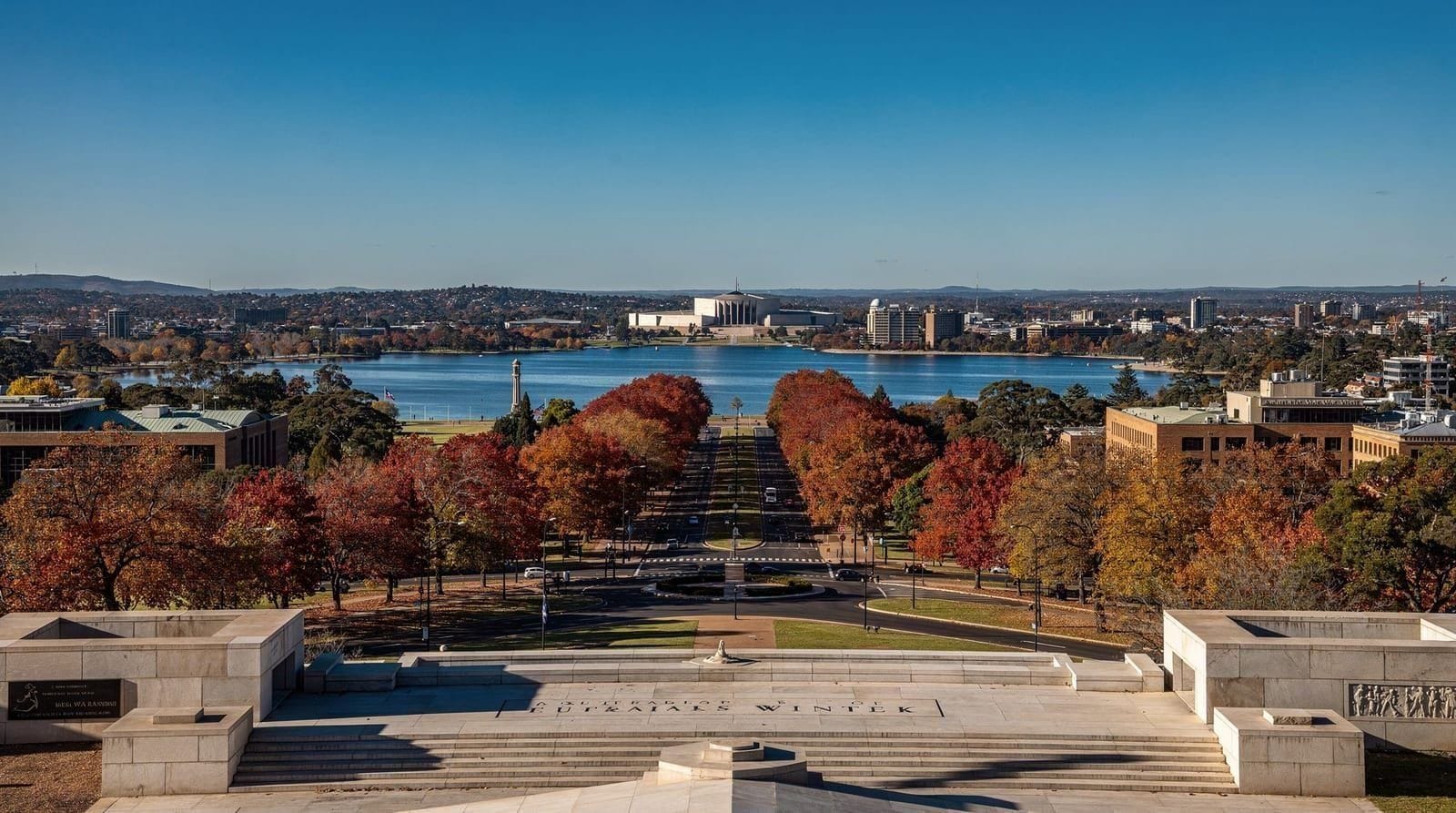
Canberra has a reputation problem that is largely unfair. It gets described as boring, bureaucratic, and built by committee — which is partly true in the sense that it was literally designed and constructed to specification as a compromise capital (neither Sydney nor Melbourne wanted the other to win). The result is a planned city with wide boulevards, low density, no CBD skyscraper cluster, and an unusual amount of green space and parkland.
What that planning actually produced: the world’s best concentration of Australian cultural institutions in a single, accessible location. The Australian War Memorial, the National Gallery, the National Museum, the National Portrait Gallery, and Parliament House are all within 5 km of each other, all substantially free, and all of genuine international quality. No other Australian city has this density of serious institutions.
The honest assessment: Canberra rewards visitors who want those institutions, and underwhelms visitors who want a lively street scene or dramatic scenery. Get clear about which category you are in before making the 3-hour drive.
| At a glance | |
|---|---|
| Where | ~240 km south-west of Sydney CBD, Australian Capital Territory |
| Cost | Major museums, galleries, and Parliament House are free |
| Time needed | 1 very long day, or an overnight to see the main institutions properly |
| Getting there | Drive ~3–3.5 hrs via the Hume Highway, or coach ~3.5–4 hrs from Central Station |
| Best time | September–October for Floriade and spring weather; March–May for autumn and quieter museums |
Getting there from Sydney
By car: Take the Hume Highway (M31) south-west from Sydney, turning onto the Federal Highway at Goulburn toward Canberra. Total distance is approximately 240 km; allow 3–3.5 hours. Traffic is normally light except on public holiday weekends (Canberra is a popular weekend destination from Sydney). The drive passes through farming country — the last section through the Brindabella Ranges gives some relief from the flat highway.
By coach: Murrays Australia and Greyhound operate frequent services from Sydney CBD (Central Station) to Canberra’s Civic interchange. Journey time is 3.5–4 hours; check current fares with the operators. A practical alternative to driving if you do not have a car or prefer to nap in transit. Canberra has a good bus network from the interchange.
By organised day tour: Guided tours from Sydney typically depart at 6:30–7:30 am and return by 9–10 pm. They include transport, entrance fees where applicable, and a guided circuit of the major institutions. Better value than they appear on the surface — Canberra is confusing to navigate without prior knowledge, and a guide who knows which institution to prioritise saves significant time.
Canberra day tour from Sydney — guided circuit of Parliament, War Memorial, and major institutionsThe Australian War Memorial
The Australian War Memorial is, without qualification, one of the world’s best military history museums. The building itself is significant — a massive Byzantine-influenced dome and colonnaded approach, set against the Brindabella Ranges — and the collections inside are both comprehensive and emotionally powerful.
The Conflicts 1945–Today galleries (opened 2023 after a AUD 500m expansion) cover Australia’s military involvement in Korea, Vietnam, and more recent deployments with a level of honest complexity that goes well beyond conventional military museum triumphalism. The aircraft gallery includes a Lancaster bomber and a First World War plane in extraordinary condition.
Entry is free. Allow 3–4 hours minimum for serious engagement; you can cover the main galleries in 1.5 hours if time is limited. Open daily 10 am–5 pm.
Parliament House
Parliament House, completed in 1988, sits at the apex of the Parliamentary Triangle — the geometric arrangement of the planned capital. The building is partially embedded in Capital Hill, with a massive stainless steel flagpole rising from the roof.
Visitors can: walk through the building when parliament is not in session (free), observe parliamentary debate from the public galleries when parliament is sitting (check the sitting calendar — approximately 18 weeks per year), and access the rooftop grass covering for views over the city and Lake Burley Griffin.
The Parliament House website lists sitting dates. If you can visit on a sitting day and are willing to queue for the House of Representatives or Senate gallery, witnessing Australian parliamentary debate (which is considerably less formal than many visitors expect) is a worthwhile experience.
Old Parliament House (on the same axis, closer to Lake Burley Griffin) is now the Museum of Australian Democracy — an underrated institution covering the history of Australian politics and democracy. Entry is free.
National Gallery of Australia
The National Gallery on the Lake Burley Griffin lakeshore holds Australia’s national art collection, with 166,000 works including the strongest Aboriginal and Torres Strait Islander collection in the world. The gallery is free (some special exhibitions charge).
The permanent collection highlights: the Clifford Possum Tjapaltjarri papunya paintings, Sidney Nolan’s Ned Kelly series, and the international galleries including a Pollock and a Rothko. The Aboriginal and Torres Strait Islander galleries are the most important and distinctive collection in the building.
Allow 2 hours minimum; art enthusiasts could spend a full day.
Canberra day trip from Sydney with buffet lunch — transport included, full day guided circuitNational Museum of Australia
The National Museum on the Acton Peninsula (north side of Lake Burley Griffin, accessible by ferry or bus) covers Australian social, environmental, and political history. The permanent collection is less immediately impressive than the War Memorial’s, but the temporary exhibitions are consistently well-curated. Entry is free.
The building itself is worth a look — a postmodern design by Ashton Raggatt McDougall that has been controversial since completion in 2001.
Floriade festival (September–October)
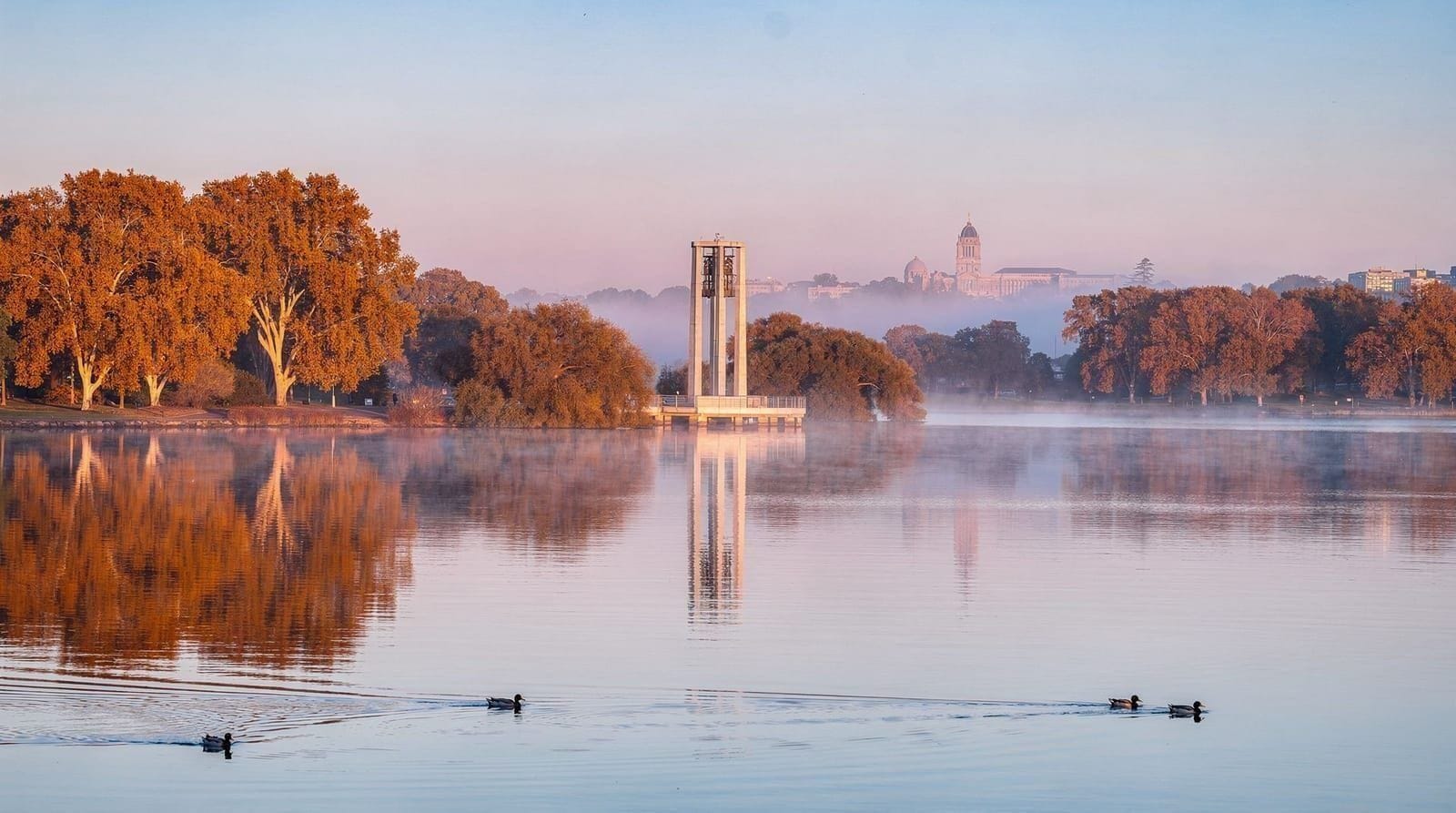
Commonwealth Park along the Lake Burley Griffin lakeshore hosts Floriade each September–October — a tulip festival with one million bulbs planted each year, supplemented by other spring flowers, food stalls, and evening events. It is genuinely spectacular in the right conditions, and genuinely overcrowded on peak weekends.
If you are visiting specifically for Floriade, go mid-week in late September (when the tulips are at their best and crowds are lower) or accept that a Saturday visit will involve crowds comparable to Sydney’s New Year’s Eve. The Floriade website updates bloom conditions weekly during the season.
The Canberra day trip guide includes a Floriade-specific section with timing recommendations.
Getting around Canberra
Canberra has a free bus service connecting the main tourist institutions (the Tourist Shuttle), and a regular public bus network accessible on a MyWay card. The city is genuinely difficult to navigate on foot — distances between institutions are larger than they appear on maps. A car or the tourist shuttle is necessary.
Canberra also has light rail connecting the Civic centre to Gungahlin, though this does not serve the main tourist sites directly.
Where to eat in Canberra
Temporada (Eagle Alley, Civic): The most acclaimed restaurant in Canberra, seasonal European-influenced cooking with a strong wine list. Dinner by booking.
Aubergine (Barker Street, Griffith): A long-established fine-dining option in the inner suburbs, reliable quality, good for a special occasion during an overnight stay.
The Cupping Room (Marcus Clarke Street, Civic): Canberra has a surprisingly strong specialty coffee scene; The Cupping Room is the benchmark. Good for a morning stop before the institutions.
War Memorial Café: Perfectly adequate café food at the institution; saves time if you are spending the day at the War Memorial.
Lonsdale Street Traders (Braddon): The Braddon suburb restaurant strip is the most concentrated collection of good eating and drinking in the city — walk the street and choose based on what is busy.
Honest day-trip logistics
A Canberra day trip from Sydney requires approximately 7 hours of driving. The realistic schedule: depart Sydney 6:30–7 am, arrive Canberra 9:30–10 am, visit War Memorial and Parliament House (10 am–3 pm), lunch (1–2 pm), depart Canberra 3:30–4 pm, back in Sydney 7–7:30 pm. That leaves roughly 4–5 hours of sightseeing time — enough for two major institutions but rushed.
An overnight stay in Canberra changes the calculation significantly. Hotel prices in Canberra are lower than Sydney for comparable quality; AUD 120–180 for a solid 3-star option in Civic. The 10-day NSW itinerary includes a Canberra overnight as part of a broader circuit.
Canberra city highlights and Floriade day tour from Sydney — September–October seasonal specialityShould you drive, coach, or tour?
If you have a car and are comfortable with a long return drive, self-driving gives you the most flexibility — you can stop en route, adjust your schedule, and leave when you choose. If you don’t want to drive 6+ hours in a single day, the coach is a reasonable middle ground: cheaper than a guided tour, no navigation required, and you can nap or work on the way.
A guided day tour costs more but removes all logistics — useful if you are short on time and want a single efficient day rather than working out bus routes between institutions once you arrive. For a broader comparison of NSW day trips and which suit self-drive versus guided options, see the best day trips from Sydney guide and the driving in Sydney and NSW guide if you plan to hire a car.
Canberra as part of a longer NSW trip
Because Canberra sits roughly midway between Sydney and the Snowy Mountains/South Coast region, it works well as a stopover rather than a there-and-back day trip if your schedule allows it. Travellers doing the 10-day NSW itinerary or the 14-day NSW grand tour typically spend one night in Canberra en route to or from the Southern Highlands, rather than doubling back to Sydney the same day. If Canberra is your only inland stop, pairing it with the Southern Highlands on the drive back breaks up the return journey with a scenic detour.
Frequently asked questions about Canberra
Is Canberra worth visiting for one day?
Yes, if you are selective. A single day from Sydney gives you roughly 4–5 hours of actual sightseeing once transit is accounted for — enough to properly cover two major institutions such as the War Memorial and Parliament House, or the National Gallery and National Museum. Trying to fit in more turns the day into a rushed checklist. If you want to see three or more institutions properly, an overnight stay is the better option.
What is the best month to visit Canberra?
September and October are the standout months if Floriade’s tulip display interests you, combined with mild spring weather. March to May (autumn) is a close second, with fewer crowds and comfortable temperatures for walking between institutions. Avoid July and August unless you don’t mind near-freezing overnight temperatures — the museums themselves are unaffected by weather, but outdoor sites like Commonwealth Park and the Parliament House rooftop are far less pleasant.
Planning
The Canberra day trip guide covers the full logistics including parking, institution opening times, and tips for first-time visitors. The best day trips from Sydney guide compares Canberra with other options — Canberra is the most distinctly cultural choice in the day-trip portfolio, and worth separating from the outdoor options. The 14-day NSW grand tour includes Canberra as part of a longer road trip combining the coast, highlands, and capital.
Top experiences
Bookable activities with verified prices and instant confirmation on GetYourGuide.